
No products in the cart.
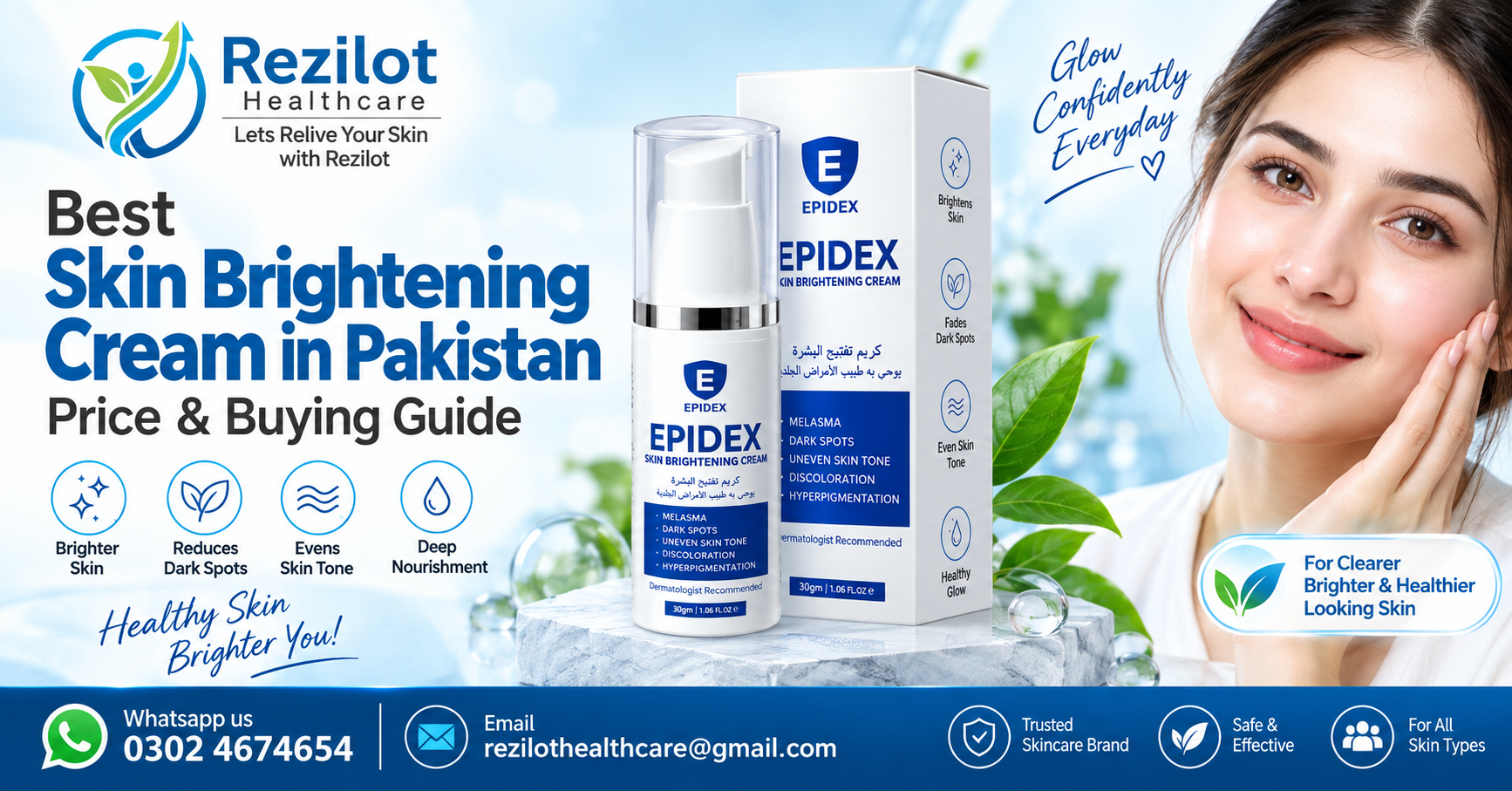
Best Skin Brightening Cream in Pakistan – Price & Buying Guide
Best Skin Brightening Cream in Pakistan – Price & Buying Guide
Finding the best skin brightening cream in Pakistan sounds easy until you actually start shopping. Walk into a cosmetics store, browse a Pakistani pharmacy website, or scroll through an online marketplace and you’ll encounter everything from inexpensive “instant whitening” creams to imported vitamin C formulas costing several thousand rupees. Almost every package promises brightness, glow, spot reduction, or a more even complexion. The difficult part isn’t finding a product. It’s figuring out which product makes sense for your skin without wasting money—or irritating your face in the process.
Skin brightening also needs a little perspective. Healthy skincare isn’t about changing your natural skin colour. A useful brightening product is generally aimed at concerns such as dullness, uneven-looking tone, post-acne marks, sun-induced pigmentation, and dark spots. Results depend on why the pigmentation exists, the ingredients being used, your skin type, sun exposure, consistency, and sometimes underlying medical conditions. No legitimate cosmetic cream can safely transform someone’s natural complexion overnight.
Pakistani consumers have another challenge: prices and product availability change frequently because the market contains locally manufactured products as well as imported skincare affected by exchange rates, retailer margins, pack sizes, promotions, and import costs. For that reason, prices in this guide should be treated as approximate shopping ranges rather than live quotations. Real-time retailer search was not available while this guide was prepared, so check the current price, ingredient list, seller reputation, and package size before purchasing.
This guide looks at popular choices including Olay, Pond’s, Garnier, L’Oréal Paris, and Neutrogena, while also explaining what ingredients actually deserve your attention. More importantly, we’ll cover sunscreen, counterfeit products, potentially harmful bleaching ingredients, skin types, realistic expectations, and when pigmentation deserves a dermatologist’s attention.
What Is a Skin Brightening Cream and How Does It Work?
A skin brightening cream is essentially a skincare product designed to improve the appearance of dull or uneven-looking skin. Depending on its formula, it may contain ingredients that support surface-cell turnover, reduce the appearance of existing pigmentation, help limit pathways involved in excess pigment formation, moisturize the skin barrier, or protect against environmental damage. That is quite different from the old-fashioned idea that a cream should simply “make you fair.” Think of brightening as cleaning a slightly foggy window rather than replacing the glass: the goal is to reveal a clearer, more even-looking version of the skin you already have.
Why does skin become uneven in the first place? Sun exposure is one major contributor. Acne can leave post-inflammatory hyperpigmentation, while irritation, hormonal influences, certain medications, and conditions such as melasma can also produce discoloration. Even repeated rubbing or picking at blemishes may make marks more persistent. Because these causes differ, there isn’t one universally “best” brightening cream. Someone dealing with mild post-acne marks may want a different routine from a person with persistent symmetrical facial pigmentation.
Good formulas generally work gradually. Ingredients such as niacinamide, vitamin C derivatives, alpha arbutin, azelaic acid, glycolic acid, and other exfoliating or pigment-focused ingredients may be useful in appropriately formulated products. Moisturizers can also make dull skin look healthier simply by improving hydration and supporting the barrier. The missing piece in many routines is sunscreen. If UV exposure continually encourages pigmentation while you’re trying to reduce its appearance, you’re effectively pressing the accelerator and brake at the same time.
Expectations matter as much as ingredients. Cosmetics normally require consistent use over weeks rather than days, and stubborn pigmentation may require professional assessment. If a product advertises dramatic fairness in a few applications, that’s a reason to examine the formula and claims carefully rather than a reason to buy it immediately.
Brightening vs. Whitening: What’s the Difference?
“Brightening” and “whitening” are often used interchangeably in South Asian beauty marketing, but they don’t necessarily describe the same goal. Skin brightening is better understood as improving radiance and reducing the visible contrast created by dark spots, dullness, tanning, or uneven pigmentation. “Whitening,” on the other hand, is frequently marketed as making the overall complexion lighter. That distinction matters because trying to erase someone’s genetically determined skin tone is neither a sensible measure of healthy skin nor a realistic standard for evaluating skincare.
Imagine two people with exactly the same natural complexion. One has recently developed acne marks, dehydration, and noticeable sun tanning, while the other’s skin is hydrated and evenly toned. The second person’s face may appear brighter even though their underlying natural skin colour is essentially the same. That’s the kind of improvement a thoughtful skincare routine should target: clarity, uniformity, hydration, and protection, not an arbitrary shade on a colour chart.
Marketing terminology can unfortunately blur this distinction. Products sold in Pakistan may use words such as fair, white, spotless, luminous, radiant, bright, glow, or lightening. Don’t judge a formula by the largest word printed on the box. Turn the package around and inspect the ingredient list, directions, manufacturer information, batch details, expiry date, and sun-protection claims. A product containing recognizable, appropriate skincare ingredients is much easier to evaluate than one promising miraculous results while providing little information about its composition.
It’s also important to distinguish ordinary cosmetic pigmentation from a condition that deserves medical care. Melasma, rapidly changing pigmentation, persistent irritation, or unexplained discoloration can require a dermatologist’s assessment. A cosmetic brightening cream shouldn’t become a substitute for diagnosis. Your goal should be comfortable, healthy-looking skin with a routine you can maintain—not chasing progressively lighter skin through increasingly aggressive products.
Common Ingredients Used in Brightening Creams
The ingredient list is where skincare marketing finally has to meet chemistry. One of the most familiar brightening ingredients is niacinamide, a form of vitamin B3 commonly incorporated into products designed for uneven-looking skin and barrier support. It’s popular partly because it fits comfortably into many routines and is available across numerous price ranges. Vitamin C and its derivatives are also common in brightening formulas, where they’re used for antioxidant support and improvements in the appearance of dull or uneven skin. Different vitamin C formulations vary in stability and concentration, so the phrase “contains vitamin C” doesn’t automatically tell you how effective a product will be.
Alpha arbutin is another ingredient seen in pigmentation-focused products, while azelaic acid is frequently used for concerns involving acne and uneven pigmentation. Alpha hydroxy acids such as glycolic acid work differently: they exfoliate and encourage surface-cell turnover, which can improve texture and the appearance of certain discoloration. Because acids can irritate sensitive skin, stronger isn’t always better. Introducing an exfoliating product gradually is usually more sensible than throwing several active ingredients onto your face at once.
Other formulas may contain licorice-derived ingredients, retinoids, tranexamic-acid-based products, or combinations of pigment-targeting actives. Some of these deserve additional care or professional guidance depending on strength, formulation, pregnancy status, existing skin conditions, and other products being used. Prescription-strength treatments shouldn’t be treated like ordinary fairness cosmetics.
Then there is the ingredient people underestimate: sunscreen. Broad-spectrum sun protection helps prevent UV exposure from worsening existing pigmentation and creating additional unevenness. If you’re using exfoliating or pigmentation-focused skincare but skipping sun protection, your routine is missing a foundational step. Instead of buying the cream with the longest ingredient list, look for a routine in which a few appropriate products work together without constantly irritating your skin.
Best Skin Brightening Creams in Pakistan
There isn’t a single cream that can objectively be called the best for every Pakistani consumer. Skin can be oily, dry, combination, acne-prone, sensitive, or affected by a specific pigmentation disorder, and the climate varies dramatically between cities and seasons. A rich cream that feels comfortable during a dry Islamabad winter might feel heavy during a humid Karachi afternoon. Product selection therefore works better when you compare formula, skin type, active ingredients, texture, budget, authenticity, and availability rather than relying solely on a ranking.
Several mainstream brands have brightening ranges commonly encountered in Pakistan. Depending on current distribution, these can include Olay brightening products, Pond’s Bright Beauty, Garnier Bright Complete, L’Oréal Paris Glycolic Bright, and Neutrogena Bright Boost. Product names and formulations may change between markets or over time, so always read the packaging of the exact item you’re purchasing. Imported and locally distributed versions can also differ.
Here’s a practical snapshot. These prices are broad indicative ranges only, not verified live prices as of the day you read this article:
| Product/Range | Key Marketing Focus | Suitable Starting Point For | Approx. Pakistan Price Range* |
|---|---|---|---|
| Pond’s Bright Beauty | Brightness and daily moisturization | Budget-conscious normal/combination skin | Rs. 400–1,500 |
| Garnier Bright Complete | Vitamin C-focused brightening | Dullness and uneven-looking tone | Rs. 600–2,000 |
| Olay Brightening/Natural White range | Moisturization and brightening | Normal to dry/combination skin | Rs. 1,500–4,500+ |
| L’Oréal Paris Glycolic Bright | Glycolic-acid-focused brightening | Uneven texture and dark marks | Rs. 1,500–4,000+ |
| Neutrogena Bright Boost | Brightness and surface renewal | Consumers seeking premium skincare | Rs. 2,500–6,500+ |
*Prices vary significantly by pack size, seller, promotions, imports, and formulation. Confirm current pricing and authenticity before ordering.
Olay Natural White / Brightening Day Cream
Olay has been a familiar name in Pakistani skincare for years, and its brightening or Natural White-branded products have historically appealed to shoppers looking for a moisturizer that combines everyday hydration with tone-evening or radiance claims. The exact product available to you may now carry different branding depending on the market, so don’t assume that two Olay boxes with similar names necessarily contain identical formulas. Check the ingredient list, SPF information, pack size, manufacturer or importer details, and expiry date on the specific unit you’re considering.
Who might appreciate an Olay brightening cream? Someone with normal, combination, or slightly dry skin who wants a conventional cream texture may find it more comfortable than a highly active treatment serum. The advantage of this style of product is simplicity. Instead of turning your bathroom shelf into a miniature chemistry laboratory, you can start with cleansing, moisturization, and proper sunscreen, then introduce a targeted active only if necessary. For beginners, a routine you actually follow every morning usually beats an elaborate routine abandoned after ten days.
However, don’t purchase Olay—or any brand—based purely on reputation. Fragrance, texture, specific actives, and sunscreen protection vary between formulations. If your skin is acne-prone, examine whether the cream feels too rich for you. If you’re sensitive to fragrance, inspect the ingredients carefully. And if the product contains SPF, remember that a moisturizer with a sun-protection claim doesn’t help much if you apply too little to obtain the labelled protection.
In Pakistan, Olay prices can vary sharply between retailers because some items are imported. An approximate range of Rs. 1,500 to Rs. 4,500 or more is plausible across different brightening products and pack sizes, but current prices should be checked before purchase. Suspiciously cheap imported stock deserves extra scrutiny because counterfeit or poorly stored skincare can undermine both safety and performance.
Pond’s Bright Beauty Cream
Pond’s Bright Beauty is one of the more recognizable mass-market options for consumers searching phrases such as best whitening cream in Pakistan, affordable brightening cream, or daily glow cream. Its biggest advantage is accessibility. Compared with many imported dermocosmetic products, Pond’s is typically positioned for shoppers who want an everyday face cream without paying premium-skincare prices. That makes it an obvious starting point for students and budget-conscious consumers, provided the specific formula suits their skin.
The experience you get depends heavily on skin type. People with normal or combination skin may like a lightweight daily product, while someone with very dry skin could need additional moisturization. Conversely, acne-prone users shouldn’t assume that “brightening” automatically means acne-friendly. Check the current ingredient list rather than relying on an older online review, because manufacturers periodically reformulate products.
Pond’s also illustrates why expectations need to stay realistic. A cosmetic cream may make the face look more hydrated or radiant and can contain ingredients intended to improve uneven-looking tone, but dramatic overnight pigment removal isn’t a reasonable benchmark. Dark marks caused by acne or sun exposure often develop gradually, so improvement can also take time. Deep or persistent pigmentation may need more targeted treatment.
Pricing is usually one of Pond’s strongest attractions. Depending on jar or tube size and the retailer, Bright Beauty products may fall somewhere around Rs. 400 to Rs. 1,500, though bundles and larger products can sit outside that range. When comparing two stores, compare the price per gram, not merely the sticker price. A Rs. 700 small pack can actually be more expensive per gram than a Rs. 1,200 larger pack. Buy sealed stock from a reputable retailer and pair your morning routine with adequate broad-spectrum sunscreen.
Garnier Bright Complete Vitamin C Cream
Garnier’s Bright Complete range is closely associated with vitamin C-focused skincare, making it appealing to people whose main concerns are dullness, post-acne marks, or an uneven-looking complexion. Vitamin C is a familiar antioxidant ingredient in modern skincare, although not all vitamin C products are created equally. Different derivatives, concentrations, packaging systems, and complete formulations affect stability and user experience. That’s why simply spotting an orange slice or “Vitamin C” on the front of a box isn’t enough to judge a cream.
For a beginner, Garnier can offer an approachable bridge between ordinary moisturizer and ingredient-led skincare. You can build a straightforward routine around a gentle cleanser, an appropriate moisturizer or brightening product, and sunscreen. If you’re already using a vitamin C serum, however, ask yourself whether adding another vitamin-C-focused cream provides any real benefit. More products don’t automatically mean faster results, and piling on actives can make it harder to identify what’s causing irritation.
Texture is another practical consideration in Pakistan. People living in hot or humid conditions frequently prefer lighter daytime products, whereas dry skin may need something richer. Test a small amount first and watch for persistent burning, redness, itching, or breakouts. A mild sensory feeling isn’t proof that an active is “working”; irritation is still irritation.
Depending on product type and pack size, Garnier Bright Complete products may roughly fall within Rs. 600 to Rs. 2,000 or more in Pakistan. Imported serums or specialized products can cost more. Compare official packaging photographs with the item you receive, inspect seals and batch information, and be cautious of deals that look implausibly cheap. A genuine mid-priced product is a much better investment than a counterfeit premium product.
L’Oréal Paris Glycolic Bright Cream
L’Oréal Paris Glycolic Bright products appeal to shoppers who want something more active than a conventional fairness moisturizer. As the name suggests, glycolic acid plays an important role in the range. Glycolic acid belongs to the alpha hydroxy acid family and is commonly used to exfoliate the skin’s surface, improve texture, and help with the appearance of uneven pigmentation. That sounds attractive, but it also introduces a rule worth remembering: exfoliation should be strategic, not aggressive.
If you’re new to acids, resist the temptation to combine a glycolic product immediately with every exfoliating toner, scrub, retinoid, and strong serum you own. Your skin barrier isn’t a kitchen counter that becomes cleaner the harder you scrub it. Over-exfoliation can produce burning, redness, dryness, and inflammation—and inflammation itself can contribute to post-inflammatory pigmentation in susceptible skin. Introduce active products gradually and follow the product’s directions.
The range can be particularly interesting for people concerned about dull texture and visible dark marks, but sensitive skin deserves extra caution. Patch testing is sensible, and anyone with eczema, an impaired barrier, persistent acne inflammation, or another skin condition may benefit from professional guidance before introducing stronger actives. Daytime sunscreen becomes especially important when your routine contains exfoliating ingredients.
In Pakistan, products from L’Oréal’s Glycolic Bright line may approximately cost Rs. 1,500 to Rs. 4,000 or more, depending on whether you’re purchasing a cream, serum, cleanser, pack size, imported variant, or promotional bundle. Don’t compare a serum price with a cream price without checking volume. Look at cost per millilitre, ingredient function, and how long the product will realistically last. The best-value product isn’t necessarily the cheapest; it’s the one you can use safely and consistently for the concern you’re actually treating.
Neutrogena Bright Boost Products
Neutrogena’s Bright Boost range occupies a more premium position for many Pakistani shoppers, particularly when products are imported. The range is designed around radiance and skin renewal rather than old-fashioned fairness messaging, which makes it attractive to consumers who are increasingly shopping by ingredients, texture, and specific skin concerns. Depending on the exact product and market, the range can include moisturizers, gels, serums, or exfoliating products, so treat “Bright Boost” as a product family rather than one universal cream.
The main buying question is whether the extra cost makes sense for your routine. Premium packaging or a famous international brand doesn’t automatically guarantee better results than an affordable, well-formulated alternative. If your budget is limited, sunscreen and a basic moisturizer often deserve priority before an expensive brightening product. A Rs. 5,000 treatment used without sun protection may be a weaker overall strategy than a modestly priced active combined with consistent sunscreen.
People with oily or combination skin may prefer gel-like textures when available, while dry skin may need additional barrier support. If a Bright Boost product contains exfoliating ingredients, avoid introducing several exfoliants simultaneously. Give your skin enough time to show whether a product is tolerable before adding something else. This approach may feel slow, but it makes troubleshooting dramatically easier.
Approximate Pakistani pricing can range from around Rs. 2,500 to Rs. 6,500 or more, particularly for imported products. Exchange rates, stock availability, and seller margins can create large differences. Counterfeit risk is also relevant whenever imported skincare becomes popular. Prefer authorized or established sellers, keep the receipt, inspect packaging quality and seals, and avoid buying a product solely because an unfamiliar marketplace seller offers it at half the typical market price.
Local Dermatologist-Recommended Brightening Creams
Pakistan’s skincare market isn’t limited to global cosmetic brands. Pharmacies and dermatology-focused retailers carry local and imported products containing ingredients such as niacinamide, alpha arbutin, azelaic acid, vitamin C derivatives, glycolic acid, and other pigmentation-focused compounds. In many cases, selecting by ingredient and diagnosis makes more sense than asking for the strongest “whitening cream.” A dermatologist can also distinguish ordinary post-acne marks from melasma or other pigmentation conditions that may need a different treatment plan.
The phrase “dermatologist recommended” requires some skepticism when it appears in advertising. A product doesn’t become medically appropriate for everyone simply because a marketing page uses clinical-looking language. Genuine professional advice is individualized. A dermatologist can consider your skin type, history of irritation, pregnancy or breastfeeding status, acne, current medications, existing products, and the pattern of pigmentation before recommending treatment.
This becomes particularly important with prescription-strength depigmenting agents, topical steroids, or combination creams. Products containing potent medications shouldn’t be casually used as fairness creams. Inappropriate or prolonged use of steroid-containing facial creams can cause significant problems, while hydroquinone-based treatment is better handled with appropriate professional guidance rather than indefinite self-treatment. Never assume that a cream is harmless because a pharmacy sells it.
Local formulations can nevertheless provide excellent value when they come from reputable manufacturers and contain transparent ingredient information. They may also cost less than imported products with similar cosmetic goals. Instead of asking, “Which cream makes skin white fastest?” ask, “What is causing my pigmentation, which ingredient addresses it, and what concentration can my skin tolerate?” That small change in question can save you months of experimentation—and quite a bit of money.
Skin Brightening Cream Price in Pakistan
The skin brightening cream price in Pakistan can start at only a few hundred rupees and extend beyond Rs. 6,000 for imported or premium products. That enormous spread doesn’t mean the expensive cream is automatically six or ten times more effective. You’re paying for a mixture of formulation, ingredients, packaging, brand positioning, import costs, currency movements, distribution, retailer margins, and sometimes marketing. Understanding those factors helps you shop with your head rather than your hopes.
For budget shoppers, mass-market products from brands such as Pond’s and Garnier may offer accessible entry points. Mid-range shoppers can explore more specialized formulas or selected Olay and L’Oréal products. Premium imported skincare, including certain Neutrogena products and dermatology-focused brands, can cost considerably more. The exact price can change quickly, so verify current listings before purchasing.
Don’t overlook quantity. One retailer may advertise a 25 ml product for Rs. 1,000 while another sells 50 ml for Rs. 1,600. The second option costs more at checkout but less per millilitre. At the same time, buying the biggest pack isn’t clever if you’ve never tested the formula. For a first purchase, a smaller authentic package can reduce waste if your skin doesn’t tolerate it.
Your total routine budget matters too. Suppose you have Rs. 4,000 to spend. Using the entire amount on a brightening cream while leaving nothing for sunscreen may not be the most coherent pigmentation strategy. A gentle cleanser, suitable moisturizer or targeted brightening product, and broad-spectrum sunscreen create a more balanced foundation. Skincare is a system; treating one bottle as a magic wand is where expensive routines often go wrong.
How to Choose the Best Skin Brightening Cream in Pakistan
Choosing a brightening cream becomes much easier once you stop shopping by promises and start shopping by requirements. First identify your primary concern. Is your skin simply looking dehydrated and dull? Are you dealing with brown marks left behind by pimples? Have you developed sun-related unevenness? Or do you have persistent, symmetrical patches that could represent melasma? Different problems can look similar in a mirror but respond differently to treatment.
Next, decide what your routine is missing. Someone already using a niacinamide serum may not need another niacinamide-heavy product simply because the box says “brightening.” Someone using strong exfoliating acids may be better served by a plain barrier-supporting moisturizer than another active cream. Skincare should resemble building a team: each product needs a job. Hiring five people for the same job while leaving another position empty doesn’t make the team stronger.
Packaging and seller credibility deserve equal attention. Pakistani online marketplaces make skincare wonderfully accessible, but they also make it easier for questionable stock to circulate. Look for intact seals, readable batch or lot information, expiry dates, manufacturer/importer details where applicable, consistent printing, and a seller with an established reputation. Never rely on smell or texture alone to authenticate a sophisticated counterfeit.
Finally, establish a budget you can sustain. Brightening routines require consistency. If you can afford an expensive cream once but can’t replace it, a simpler formula that fits your monthly budget may serve you better. Choose based on skin type, evidence-informed ingredients, tolerability, authenticity, sun protection, and realistic cost. That’s far more useful than searching for one universal winner.
Choose According to Your Skin Type
Your skin type is the filter through which every ingredient and product texture has to pass. Oily and acne-prone skin often does better with lighter lotions, gels, or non-heavy formulations, although “oil-free” isn’t a guarantee that a product won’t cause problems for a particular person. If acne is your main concern, treating active breakouts matters because every new inflamed pimple can potentially leave another dark mark. Brightening old spots while new ones continuously form can feel like mopping the floor while the tap is still running.
Dry skin has a different problem. Aggressive brightening routines can worsen tightness, flaking, and barrier damage. A richer moisturizer containing barrier-supportive ingredients may therefore be more valuable than the strongest exfoliating formula available. Hydrated skin also reflects light more evenly, which can make it appear naturally more radiant without any dramatic pigment alteration.
Sensitive skin deserves the slowest approach. Fragrance, strong acids, multiple active ingredients, and frequent product switching can all complicate matters. Introduce one new product at a time and patch test when appropriate. If persistent burning, swelling, rash, or significant irritation develops, stop using the suspected product and seek medical advice when necessary.
Combination skin may require compromise rather than perfection. You don’t necessarily need separate brightening creams for every centimetre of your face. A lightweight moisturizer may work overall, with additional hydration on dry areas and targeted treatment for specific marks. The point isn’t to create the longest possible routine. It’s to find the smallest routine that reliably addresses your concerns while keeping your skin comfortable.
Look for Evidence-Based Brightening Ingredients
Ingredient literacy is one of the best defenses against exaggerated skincare advertising. Niacinamide is widely used in formulas aimed at improving the appearance of uneven tone while supporting the skin barrier. Vitamin C and its derivatives are popular for antioxidant support and brightness. Azelaic acid can be relevant when pigmentation and acne overlap, while alpha arbutin is frequently included in products targeting dark spots. Glycolic and other alpha hydroxy acids focus more heavily on exfoliation and surface renewal.
The important word is “formula.” You can’t evaluate a product from one celebrity ingredient printed in enormous letters on the package. Concentration, pH where relevant, stability, supporting ingredients, packaging, and your own tolerance influence the experience. A beautifully formulated lower-strength product that you can use consistently may outperform an aggressive formula that leaves your skin inflamed after three applications.
Be cautious about stacking actives. A routine containing glycolic acid, a retinoid, exfoliating cleanser, vitamin C, and several other treatments might look impressive in a social-media shelfie, but your face isn’t rewarded for complexity. Irritation can undermine your goals. Add products gradually and follow manufacturer directions.
Most importantly, pair pigmentation-focused skincare with sun protection. Broad-spectrum sunscreen is not a glamorous answer when someone asks for a brightening cream, but it is central to managing sun-related darkening and preventing existing pigmentation from becoming more noticeable. If persistent pigmentation doesn’t improve despite sensible skincare and protection, a dermatologist can help determine whether you’re treating the right condition in the first place.
Check Authenticity Before Buying
Counterfeit skincare isn’t merely a financial inconvenience. You’re applying the product directly to your face, often every day, which means uncertain ingredients, contamination, or poor storage are genuine concerns. Pakistan’s booming e-commerce market gives shoppers extraordinary choice, but when several sellers offer apparently identical imported skincare at wildly different prices, caution is justified. A price dramatically below the normal market range should trigger questions rather than excitement.
Start with the seller. Established pharmacies, official brand stores where available, authorized retailers, and reputable beauty platforms generally provide more accountability than an anonymous social-media page. Check whether the retailer provides clear contact details, return policies, product information, and customer support. Reviews can help, but don’t treat them as proof because reviews themselves can be unreliable.
When the product arrives, inspect it before opening. Look for tamper seals, batch numbers, manufacturing or expiry information, spelling consistency, print quality, ingredient information, and importer labels where applicable. Compare it with official brand imagery while remembering that legitimate packaging can change between markets and over time. A changed box isn’t automatically counterfeit, just as a convincing box isn’t automatically genuine.
Storage matters as well. Even authentic skincare can deteriorate if it has spent months in extreme heat or direct sunlight. Vitamin C products can be especially sensitive depending on formulation. If a product has an unusual colour, separation, damaged packaging, or other signs inconsistent with its expected condition, contact the seller or manufacturer rather than experimenting on your face. Authenticity is part of skincare performance, not a separate shopping concern.
How to Use a Brightening Cream for Better Results
A good product can still disappoint when used badly. Begin with a gentle cleanser appropriate for your skin type, then apply treatment products according to their directions. If your brightening cream is intended as a moisturizer, it will usually sit after lighter serums in the routine. During the daytime, finish with broad-spectrum sunscreen, applying an adequate amount and reapplying when sun exposure, sweating, or other circumstances make it necessary. Always prioritize the directions on the specific products you’re using.
Introduce active skincare gradually. If you’ve purchased a glycolic-acid or other exfoliating product, don’t assume daily use is automatically appropriate from the first night. Starting cautiously gives you a chance to judge tolerance. Similarly, introducing four new products on the same day makes it almost impossible to know which one caused a breakout or rash.
Consistency beats impatience. Pigmentation doesn’t usually develop overnight, and meaningful improvement often takes weeks. Take photographs under similar lighting every few weeks if you want to track progress; the mirror is surprisingly unreliable when you stare into it twice a day. Avoid switching products every week because a viral video promised faster results.
Also remember that “more” isn’t synonymous with “better.” Applying a thick layer of an active product usually doesn’t multiply its benefits. Follow labelled amounts and frequency. If pigmentation is worsening, unusually patterned, associated with other symptoms, or resistant to a well-designed routine, see a qualified dermatologist. Sometimes the most effective skincare decision is recognizing when a cosmetic cream has reached the limits of what it can reasonably do.
Side Effects, Safety Tips, and Ingredients to Avoid
Brightening skincare can cause irritation, particularly when it contains exfoliating acids, retinoid-type ingredients, fragrance, or several actives in one formula. Common warning signs include persistent burning, significant redness, swelling, itching, scaling, or a rash. Don’t interpret pain as evidence that a product is powerful. Your skin doesn’t need to suffer for skincare to work, and excessive inflammation can make discoloration harder to manage.
Be particularly wary of unlabelled or poorly labelled “instant whitening” creams. Avoid products with unknown compositions and be cautious about creams containing potent topical corticosteroids or other pharmaceutical ingredients being promoted for routine cosmetic lightening. Steroid-containing creams used inappropriately on the face can cause serious skin problems. Products containing mercury are unsafe and should not be used. Prescription-strength pigment treatments should be used according to appropriate medical advice rather than borrowed from someone else’s routine.
Pregnancy and breastfeeding introduce additional considerations because some skincare ingredients aren’t recommended during those periods. Instead of assuming that “natural” means safe, show the complete ingredient list to your healthcare professional when uncertain. The same principle applies if you’re already using prescription acne or pigmentation medication.
Patch testing can reduce surprises, although it cannot guarantee that a product will never irritate you. Apply new products cautiously and stop if a significant reaction develops. Seek urgent medical attention for severe allergic symptoms such as facial swelling or breathing difficulty. For ordinary pigmentation, patience and conservative skincare are usually safer companions than a mystery cream promising a radically lighter complexion in seven days.
Where to Buy Original Skin Brightening Cream in Pakistan
The best place to buy skincare isn’t necessarily the store with the lowest displayed price. For Pakistani consumers, reliable options can include established pharmacies, official brand outlets or online stores where available, major reputable beauty retailers, and verified marketplace sellers. The key word is traceability. You want a seller you can contact if the product arrives damaged, expired, suspicious, or different from the listing.
When shopping online, inspect the listing carefully. Confirm the pack size because photographs can make a tiny tube look enormous. Read the full product name; different items from the same range may use almost identical packaging. Check whether the item is imported or locally distributed, review the return policy, and avoid transferring money to unknown sellers solely because they’re offering an unbelievable discount.
Cash-on-delivery doesn’t automatically make a seller trustworthy, and thousands of marketplace reviews don’t replace basic inspection. When your order arrives, examine seals, batch information, expiry date, packaging consistency, and condition before using it. Keep invoices or order confirmations until you’re satisfied with the purchase.
Price comparison is useful, but compare equivalent products. A 30 ml serum shouldn’t be compared directly with a 50 g cream, and an officially imported product may carry different costs from stock sourced through another channel. If a deal seems too good to be true, investigate it. Saving Rs. 500 isn’t a bargain if the product is counterfeit, expired, or unsuitable for your skin.
Conclusion
The best skin brightening cream in Pakistan isn’t determined by the fairest model on the box, the highest price, or the loudest promise. A better choice starts with identifying what you actually want to improve—whether that’s dullness, post-acne marks, uneven tone, dryness, or sun-related pigmentation—and matching the product to your skin type. Ingredients such as niacinamide, vitamin C derivatives, azelaic acid, alpha arbutin, and glycolic acid can have useful roles in appropriately formulated routines, while broad-spectrum sunscreen remains essential when pigmentation is a concern.
Popular options from Pond’s, Garnier, Olay, L’Oréal Paris, and Neutrogena cover a broad range of budgets. Local pharmacy and dermatology-focused products can also be worthwhile, especially when selected by ingredient rather than marketing terminology. Prices in Pakistan can fluctuate considerably, so treat the ranges in this guide as shopping estimates and confirm the current price with a reputable seller.
Avoid chasing overnight transformation. Dramatic “instant whitening” claims, mystery ingredients, and indiscriminate use of medicated creams can create more problems than they solve. Healthy-looking skin comes from a routine that protects the barrier, addresses specific concerns, limits unnecessary irritation, and protects against sunlight.
If your pigmentation is persistent, rapidly changing, severe, or difficult to identify, professional diagnosis is more useful than purchasing cream after cream. Skincare works best when you know what you’re treating. Aim for healthy, comfortable, evenly toned skin, protect it consistently, and let evidence—not fairness marketing—guide your shopping decisions.
20 Frequently Asked Questions About Skin Brightening Creams in Pakistan
1. Which is the best skin brightening cream in Pakistan?
There is no single best cream for everyone. Pond’s, Garnier, Olay, L’Oréal Paris, and Neutrogena offer popular brightening ranges, but the appropriate option depends on your skin type, pigmentation concern, ingredient tolerance, budget, and access to an authentic product. For persistent pigmentation, a dermatologist can recommend a more targeted approach.
2. What is the price of skin brightening cream in Pakistan?
Prices can range from roughly Rs. 400 to more than Rs. 6,500, depending on the brand, formulation, package size, retailer, and whether the product is imported. These are indicative ranges rather than live prices. Check several reputable retailers before buying and compare equivalent package sizes.
3. Which brightening cream is best for oily skin?
Oily skin generally benefits from lightweight, non-heavy formulas. Gel creams or light lotions can feel more comfortable, but texture alone doesn’t determine whether a product will suit acne-prone skin. Check the complete formula and introduce it gradually.
4. Which brightening cream is suitable for dry skin?
Dry skin usually benefits from a brightening formula combined with effective moisturization and barrier support. Avoid overusing exfoliating acids, which can increase dryness. A separate moisturizer can be added when a brightening treatment isn’t hydrating enough.
5. Can brightening cream permanently change my natural skin colour?
A safe cosmetic brightening product isn’t intended to permanently rewrite your genetically determined complexion. Its realistic role is improving dullness or the appearance of excess pigmentation and uneven tone. Products promising permanent dramatic whitening deserve skepticism.
6. How long does a skin brightening cream take to work?
Visible changes usually require consistent use over several weeks, although timing varies substantially with the ingredient and cause of pigmentation. Some marks take considerably longer. A product promising dramatic results in a few days should be approached cautiously.
7. Is vitamin C good for skin brightening?
Vitamin C and its derivatives are commonly used in antioxidant and brightening skincare. Formulation, stability, concentration, packaging, and individual tolerance all matter, so the presence of vitamin C on a label doesn’t automatically guarantee strong results.
8. Is niacinamide useful for dark spots?
Niacinamide is widely used in products designed for uneven-looking skin and barrier support. It can fit easily into many routines and is available at multiple price points. Results still depend on the complete formulation and the cause of discoloration.
9. Is glycolic acid good for pigmentation?
Glycolic acid exfoliates surface skin and can help improve texture and the appearance of some pigmentation. It can also irritate the skin when overused. Introduce it cautiously and use appropriate sun protection.
10. Should I use sunscreen with a brightening cream?
Yes. Sun exposure can worsen pigmentation and undermine the goals of a brightening routine. Broad-spectrum sunscreen should generally be a foundational daytime step, particularly when you’re using exfoliating or pigmentation-targeting products.
11. Can I use brightening cream every day?
That depends on the formula. A gentle moisturizing cream may be designed for daily use, whereas stronger exfoliating products may require less frequent application, especially initially. Follow the directions supplied with the exact product.
12. Can brightening creams cause acne?
Any skincare product can potentially disagree with an individual user’s skin. Heavy textures, irritation, or certain ingredients may contribute to breakouts in susceptible people. Introduce one product at a time so you can identify problems more easily.
13. Are whitening creams safe?
Safety depends on the actual ingredients, formulation, and use—not the word “whitening.” Avoid unlabelled products, mercury-containing products, and inappropriate use of potent steroid or prescription creams for cosmetic lightening.
14. Can I use steroid cream to make my face brighter?
Potent topical steroids should not be used as casual cosmetic brightening creams. Inappropriate facial use can cause significant adverse effects. Use prescription medicines only for appropriate indications and according to qualified medical advice.
15. Is an expensive brightening cream always better?
No. Price reflects many factors besides effectiveness, including imports, branding, packaging, and marketing. A reasonably priced authentic product with suitable ingredients can make more sense than an expensive formula that doesn’t address your particular concern.
16. Can men use skin brightening creams?
Yes. Skincare ingredients aren’t inherently gender-specific. Men should choose products according to skin type, concerns, shaving-related sensitivity, active ingredients, and personal preference rather than packaging marketed to a particular gender.
17. Can teenagers use brightening creams?
Teenagers experiencing acne marks should focus first on gentle skincare, sun protection, and appropriate acne management. Strong or medicated pigmentation treatments shouldn’t be used casually. A dermatologist is useful when acne or pigmentation is significant.
18. How can I identify an original brightening cream?
Buy from reputable sellers and inspect seals, batch information, expiry details, print quality, packaging condition, and manufacturer or importer information. Compare the product with official brand information where possible, while remembering that packaging can legitimately change.
19. What should I do if a brightening cream burns my skin?
Stop using a product if it causes significant or persistent burning, swelling, rash, or irritation. Gentle skin care may be needed while the barrier recovers. Seek medical attention for severe reactions, facial swelling, breathing difficulty, or symptoms that don’t settle.
20. What is the safest way to brighten dull skin?
Start with the basics: gentle cleansing, adequate moisturization, broad-spectrum sunscreen, and one appropriate evidence-informed brightening ingredient if needed. Introduce products gradually and avoid mystery whitening creams or unnecessarily aggressive combinations. Persistent or unusual pigmentation should be assessed by a qualified dermatologist.

Leave a Reply