
No products in the cart.
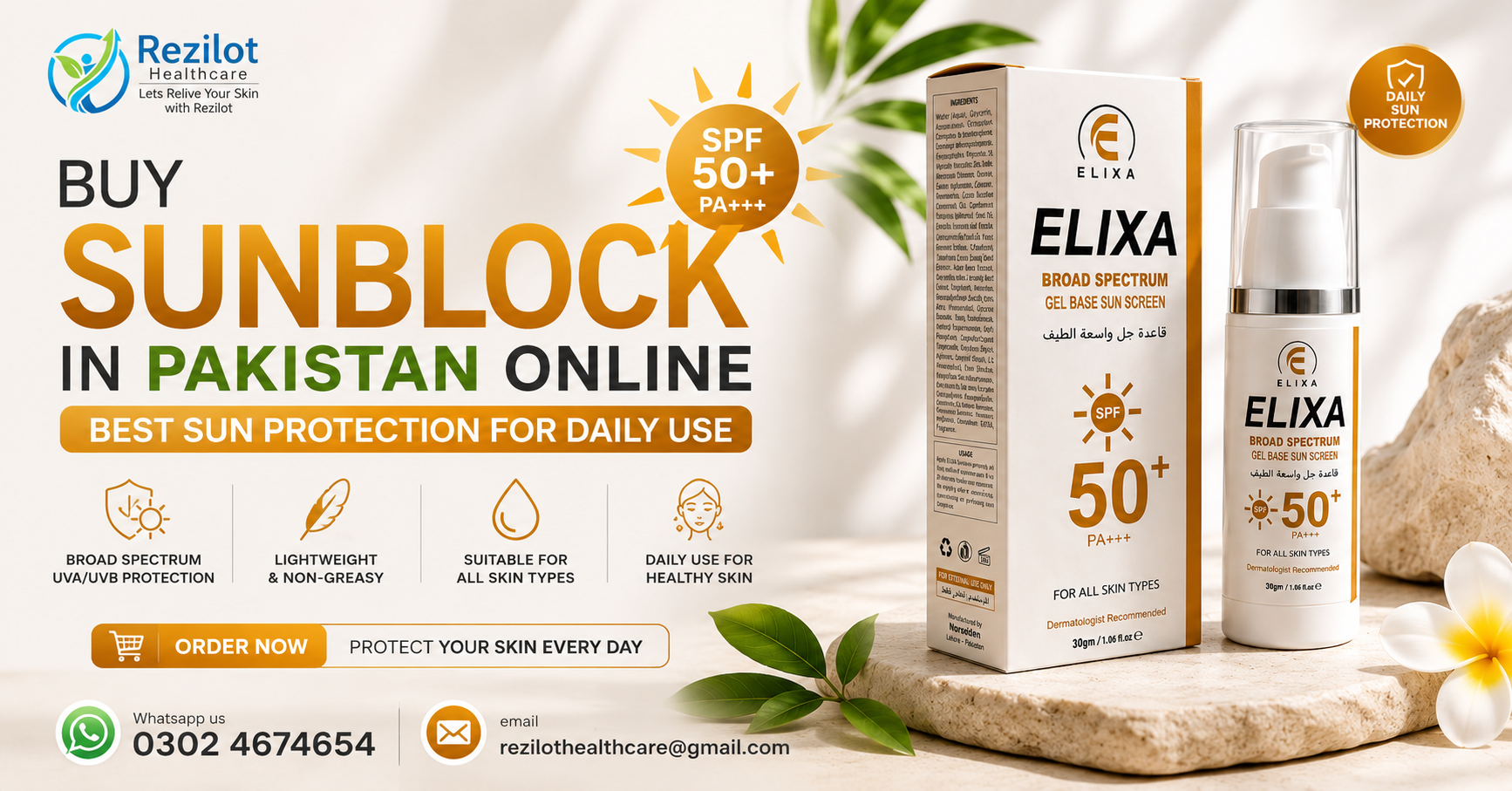
Buy Sunblock in Pakistan Online – Best Sun Protection for Daily Use
Buy Sunblock in Pakistan Online – Best Sun Protection for Daily Use
The Pakistani sun can be beautiful, but your skin may not be quite as enthusiastic about it. Whether you are commuting through busy city streets, sitting in an office beside a sunny window, driving to work, studying at university, shopping outdoors, or simply enjoying an afternoon with friends, your skin can receive ultraviolet exposure throughout the day. That is why finding the best sunblock in Pakistan is not just a beauty decision; it is an important part of a sensible daily skincare routine. A good sunblock helps protect exposed skin from UVA and UVB radiation while making it easier to maintain a comfortable, consistent routine.
If you want to buy sunblock in Pakistan online, you have plenty of choices, but that variety can also make shopping confusing. Should you choose SPF 30 or SPF 50? Is a gel better than a cream? What works for oily skin? Can sensitive skin use the same product? And how can you tell whether an online product is genuine? These are practical questions, especially when skincare products vary considerably in texture, ingredients, finish, and price.
The good news is that choosing sun protection does not have to feel like solving a complicated puzzle. Once you understand SPF, broad-spectrum protection, skin type, application, and product authenticity, you can make a much more informed choice. The goal is not necessarily to find the fanciest bottle on the shelf. It is to find a sunblock that offers suitable protection, feels comfortable enough to use every day, and fits naturally into your lifestyle.
Why Daily Sun Protection Matters in Pakistan
Sun protection is sometimes treated as something reserved for beach holidays, summer vacations, or unusually hot days. In reality, UV exposure can occur during ordinary activities, even when you are not deliberately spending hours outside. Pakistan’s climate varies dramatically from region to region, but many areas experience strong sunlight for significant portions of the year. A person walking to a car, riding a motorcycle, waiting for public transport, sitting outdoors at lunch, or running errands can accumulate meaningful sun exposure without thinking about it.
This is why consistency matters more than occasionally applying a thick layer of sunblock before an outdoor event. Think of daily sun protection like brushing your teeth. You do not wait until you have a special occasion to brush them, because prevention works best when it becomes routine. The same mindset can make sunscreen much easier to remember. Applying it in the morning after skincare and before heading outside can turn sun protection into an automatic part of your day rather than another task you constantly forget.
UV radiation is broadly divided into UVA and UVB, and both are relevant when choosing a product. UVB is strongly associated with sunburn, while UVA penetrates more deeply into the skin and contributes to premature photoaging. A quality broad-spectrum sunblock is designed to provide protection against both types of ultraviolet radiation. For someone shopping online, the phrase “broad spectrum” should therefore be much more meaningful than simply looking at an attractive package or a very high number printed on the front.
Daily sun protection can also complement a wider skincare routine. If you spend money on moisturizers, serums, pigmentation treatments, or other skincare products but regularly skip sunscreen, you may be undermining part of that routine. Sun protection acts like a protective umbrella over the rest of your skincare habits. It does not make other products unnecessary, but it helps reduce ongoing UV exposure while you use them.
How Pakistan’s Sun Exposure Affects Skin
The effect of sunlight on skin is not limited to the familiar temporary redness associated with sunburn. Repeated UV exposure can contribute to visible changes in skin over time, including uneven-looking pigmentation, dark spots, and other signs associated with photoaging. People often focus heavily on creams designed to improve the appearance of their skin while overlooking the daily environmental factor that continues to affect it.
This is especially relevant for people who are concerned about dark spots and uneven skin tone. UV exposure can encourage pigmentation to become more noticeable, particularly in individuals who are already prone to pigmentation problems. That does not mean sunblock will instantly remove existing marks. It means consistent protection can be an important part of preventing additional UV-related stimulation of pigmentation while other skincare measures address the appearance of existing concerns.
Your exposure also depends on your lifestyle. Someone working indoors all day may have a very different exposure pattern from a construction worker, delivery rider, athlete, teacher, outdoor salesperson, or person who commutes long distances. Even so, indoor lifestyles do not automatically mean zero UV exposure. Windows, outdoor transitions, driving, balconies, and occasional errands all add up.
The practical answer is not to become afraid of sunlight. Your skin does not need to live in a dark room. Instead, combine sensible sun habits such as shade, protective clothing, hats when appropriate, and a suitable broad-spectrum sunscreen. For everyday life, the best product is often the one you can apply generously and consistently without hating how it feels.
What Is the Difference Between Sunscreen and Sunblock?
The terms sunscreen and sunblock are often used interchangeably in everyday skincare conversations, especially in Pakistan. Historically, “sunblock” was commonly associated with products containing physical or mineral filters that sit on the skin and reflect or scatter some UV radiation, while “sunscreen” was often used for products containing chemical or organic filters. Modern skincare terminology is less straightforward, however, and products can contain different combinations of UV filters.
Rather than getting trapped in the name printed on the bottle, focus on the protection offered by the product. Look for an appropriate SPF rating, broad-spectrum or UVA protection information, and a formula that suits your skin. A product called sunscreen can be excellent, and a product marketed as sunblock can also be excellent. The label alone does not determine whether a formula will work well for you.
Texture is another important distinction for consumers. Some formulas are creamy and moisturizing, while others are lightweight gels, fluids, lotions, or matte finishes. Mineral formulas may sometimes leave a visible cast, although newer formulations and tinted options can reduce that issue. Chemical or organic-filter formulas may offer elegant textures that disappear more easily, although individual skin sensitivity varies.
Ultimately, choosing between sunscreen and sunblock should be less about terminology and more about practical performance. Will you use enough of it? Does it provide suitable UVA and UVB protection? Does it irritate your skin? Does the finish work with your daily routine? Those questions will take you much further than simply searching for one magic ingredient.
Physical and Chemical UV Filters Explained
Physical, or mineral, UV filters commonly include ingredients such as zinc oxide and titanium dioxide. These filters are widely used in sun-protection products and can be especially attractive to people who prefer mineral-based formulations. Some individuals with sensitive skin also find certain mineral products comfortable, although sensitivity is highly individual and no ingredient category is guaranteed to suit everyone.
Chemical, or organic, UV filters use specific molecules that absorb UV radiation and convert it into less damaging forms of energy. Modern sunscreen formulations can combine several filters to achieve broad protection across different wavelengths. The exact filter system varies by product and by the regulatory environment in which the product is sold.
There is no universal winner. One person’s favorite sunblock can be another person’s least favorite because skincare is personal. Someone with oily skin may want a fast-absorbing gel, while someone with dry skin may prefer a richer lotion. Someone with a deeper skin tone may prioritize a formula that leaves little or no visible white cast.
When buying online, read the product description and ingredient information instead of relying only on marketing phrases. Your ideal sunblock is the one that provides reliable protection and is comfortable enough that you actually use it every morning.
How to Choose the Best Sunblock in Pakistan
Choosing the best sunblock in Pakistan begins with understanding your own needs. There is no single product that is perfect for every person, climate, skin type, and lifestyle. Instead of asking which sunblock is universally best, ask which one is best for you. That small change in thinking can save you money and prevent the frustration of purchasing products that look impressive online but feel unpleasant once they arrive.
Start with protection. Look for a suitable SPF and broad-spectrum protection. Then consider texture, finish, water or sweat resistance when relevant, and compatibility with your skin. If you have acne-prone skin, you may prefer a lightweight non-comedogenic formulation. If your skin feels tight or flaky, a moisturizing sunscreen may be more comfortable. If your skin reacts easily, you may want a simpler formula and should consider patch testing a new product.
Your environment matters too. Someone spending most of the day in an air-conditioned office has different requirements from someone who works outside. A person who exercises outdoors needs to think about sweat and reapplication. Someone who wears makeup may prioritize a lightweight formula that layers without pilling.
Price should come after suitability rather than before it. A low-cost sunscreen that you never apply because it feels greasy is not really economical. Similarly, an expensive product is not automatically better. The best value comes from a product that you can use consistently, in an adequate amount, and replace before it expires.
Check the SPF and Broad-Spectrum Protection
SPF, or Sun Protection Factor, primarily describes protection against UVB-related effects such as sunburn under standardized testing conditions. It is an important part of sunscreen selection, but SPF alone does not tell the entire story. If you see a product advertising an impressive SPF but providing little information about UVA protection, look more closely before buying it.
For everyday use, many consumers prefer SPF 50 because it provides a high level of UVB protection when correctly applied. However, a higher SPF does not mean you can apply a tiny amount once and forget about sun protection for the rest of the day. Application amount and reapplication remain important.
Broad-spectrum protection is equally significant because UVA exposure is associated with photoaging and pigmentation changes. Depending on the product and market, UVA protection may be described through terms such as broad spectrum, UVA symbols, or specific rating systems. Familiarizing yourself with these labels makes online shopping much easier.
Do not treat SPF like a force field. It is better to think of sunscreen as one layer of defense. Shade, clothing, sunglasses, hats, and avoiding unnecessary intense sun exposure can all complement topical sun protection. When these habits work together, your daily routine becomes much more resilient.
Choose the Right Formula for Your Skin Type
Your skin type can determine whether you love a sunblock or abandon it after three days. Oily skin often feels better with lightweight gels, fluids, or matte-finish products that do not leave a heavy sensation. Dry skin may benefit from more moisturizing formulas that provide comfort throughout the day. Combination skin can be trickier because you may want hydration without excessive shine in the T-zone.
Sensitive skin requires extra attention. Fragrance, alcohol, certain preservatives, or particular UV filters can bother some individuals, although reactions vary widely. If your skin is reactive, introduce a new sunscreen carefully rather than immediately applying it everywhere on the first day.
Acne-prone consumers often look for products labeled non-comedogenic, but remember that this label is not a guarantee that a product will work perfectly for every acne-prone person. Texture matters, and your broader skincare routine matters too.
The best strategy is simple: choose protection first, then choose a texture you genuinely enjoy. If the product feels light, blends easily, does not excessively sting your eyes, and works with your moisturizer or makeup, you are much more likely to keep using it.
Best Sunblock for Oily and Acne-Prone Skin
Oily and acne-prone skin can make sunscreen shopping feel unnecessarily difficult. Some people avoid sunscreen because they associate it with thick, shiny creams that make the face look greasy within an hour. Fortunately, modern formulations offer a much broader range of textures, including gels, lightweight fluids, oil-control formulas, and matte-finish products.
If you have oily skin, look for a lightweight, non-greasy sunblock that settles comfortably rather than remaining as a thick layer on top of the skin. A matte or natural finish can be particularly useful if you dislike shine. Gel-type products can also feel pleasant in hot weather because they often spread easily and do not create the heavy sensation associated with richer creams.
Acne-prone skin benefits from a simple routine. You do not need to stack five different products beneath sunscreen unless your skin actually needs them. A gentle cleanser, appropriate moisturizer if needed, sunscreen, and targeted treatments recommended for your particular concerns can be enough.
Do not skip sunblock simply because you have acne. UV exposure can complicate the appearance of post-inflammatory marks, while certain acne treatments may also make skin more sensitive or prone to irritation. If you are using prescription acne medication, especially treatments that significantly affect your skin barrier or sun sensitivity, discuss suitable sun protection with your dermatologist.
Best Sunblock for Dry and Sensitive Skin
Dry skin generally appreciates a sunscreen that feels more like skincare than an additional layer of product. If your face becomes tight after cleansing or develops flaky areas during the day, an overly matte sunscreen may leave you uncomfortable. In that case, consider a moisturizing formulation that complements your existing skincare rather than fighting against it.
Sensitive skin needs an even more thoughtful approach. There is no universal “sensitive skin sunscreen” that works for everybody, because sensitivity can have many causes. Some people react to fragrance, while others dislike particular preservatives, filters, or alcohol-heavy formulations. If you know that certain ingredients irritate your skin, check the ingredient list carefully before ordering.
A patch test can be useful when introducing a new product. Apply a small amount to a limited area according to your usual skincare-testing practice and observe how your skin responds. If you experience persistent burning, swelling, rash, or significant irritation, stop using the product and seek professional medical advice when appropriate.
For dry or sensitive skin, comfort is not a luxury. If your sunscreen causes irritation every morning, you are unlikely to use it consistently. A comfortable sunscreen is a practical sunscreen, and practicality is one of the most underrated qualities in skincare.
Best Sunblock for Men in Pakistan
Sun protection is not gender-specific, even though skincare marketing sometimes makes it appear that way. Men in Pakistan can benefit from exactly the same principles: broad-spectrum protection, suitable SPF, appropriate application, and regular reapplication when exposure continues. The biggest difference may simply be personal preference around texture and finish.
Many men prefer lightweight products that absorb quickly and do not feel sticky beneath facial hair. If you have a beard, remember that sunscreen still needs to reach exposed skin rather than simply coating the hair. Apply it carefully to the exposed areas of your face, ears, neck, and other uncovered skin.
Men who shave may also want to consider how their skin reacts immediately after shaving. If your skin feels irritated or unusually sensitive after shaving, a soothing skincare routine can help. Avoid forcing a sunscreen onto freshly irritated skin simply because it is part of your morning schedule.
For office workers, students, drivers, and outdoor professionals, an easy-to-carry sunscreen can make reapplication more realistic. The best routine is the one that survives real life. If a product takes thirty seconds to apply and leaves a finish you are happy with, you are far more likely to keep it in rotation.
Best Sunblock for Women and Everyday Makeup
For people who wear makeup, sunscreen becomes part of a layering puzzle. Nobody wants foundation separating, pilling, or becoming patchy because the sunscreen underneath did not cooperate. That is why a makeup-friendly sunblock can make a major difference to daily convenience.
A lightweight sunscreen that settles before makeup can create a smoother base. However, “primer-like” does not automatically mean better protection. Protection should remain the first priority, while cosmetic elegance comes second. Allowing skincare and sunscreen a little time to settle can also reduce friction when you apply makeup.
Tinted sunscreens can be appealing because they may help minimize visible white cast while providing a more even appearance. They can be particularly interesting for people with medium to deeper skin tones who have struggled with traditional mineral formulas leaving a noticeable pale layer.
Remember that makeup with SPF does not necessarily replace dedicated sunscreen. Foundation, concealer, or powder is usually applied unevenly and in quantities that may not match the tested sunscreen application amount. Treat sunscreen as your dedicated protection step, then use makeup as your cosmetic layer.
Best Sunblock for Kids and Families
Children need sensible sun protection too, particularly when they spend extended periods outdoors. For family use, convenience becomes a major factor because parents may need to apply sunscreen to several people quickly. A product that spreads easily, feels comfortable, and is appropriate for the child’s age can make the routine much less stressful.
Sun protection for children should not rely solely on sunscreen. Shade, hats, protective clothing, and avoiding unnecessary intense exposure can all play useful roles. Parents should also follow the product’s age guidance and read the label carefully before application.
If a child has eczema, unusually sensitive skin, or a known allergy, it is sensible to consult a pediatrician or dermatologist about appropriate products. Do not assume that a sunscreen marketed for adults will automatically be ideal for every child.
When buying family sunscreen online, check the product size, expiry information, packaging, and seller reputation. Larger bottles can be convenient for regular family use, but only if the product will be used before its recommended expiry period. A family sunscreen should be practical, trustworthy, and easy enough to apply that nobody is tempted to skip it.
Why SPF 50 Sunblock Is Popular for Daily Use
SPF 50 sunblock has become a popular choice for people who want high-level UVB protection for everyday life. That popularity makes sense, especially in regions where sunlight can be intense and outdoor exposure is common. Still, SPF 50 should not be misunderstood as permission to stay outside indefinitely without reapplying.
The amount applied has a huge impact on the protection you actually receive. Applying a thin smear because you want the product to last longer may significantly reduce the protection compared with applying the tested amount. This is one reason buying an affordable, comfortable sunscreen can sometimes be more practical than purchasing a tiny luxury product that you ration.
SPF 50 can also be appealing to people who are particularly concerned about pigmentation, outdoor work, or prolonged exposure. However, people with specific medical skin conditions should follow their dermatologist’s advice because sun protection recommendations can be individualized.
The simple takeaway is that SPF 50 is a strong everyday option, but it is not magic. Use an adequate amount, cover exposed areas, reapply as needed, and combine sunscreen with other sun-protective habits.
How to Apply Sunblock Correctly
Even an excellent sunscreen cannot provide its intended protection if it is applied too sparingly or unevenly. Application technique therefore matters almost as much as product selection. Apply sunscreen to clean, dry skin as part of your morning routine, giving earlier skincare layers enough time to settle when necessary.
Do not forget areas that are commonly missed. The ears, neck, hairline, forehead edges, and hands can receive significant exposure. If you wear clothing that leaves parts of your chest or arms exposed, those areas need attention too.
For the face, many dermatology professionals commonly teach patients to use a generous, consistent amount rather than applying an extremely thin layer. One practical approach is to use a measured visual method such as the “two-finger” technique for face and neck, although the exact amount needed can vary with product texture and the areas covered.
Do not aggressively rub until every trace disappears if doing so causes you to remove or redistribute the product unevenly. Spread it thoroughly and evenly. If you are applying sunscreen to the body, use enough to cover the exposed skin rather than trying to stretch a small amount across a large area.
How Often Should You Reapply Sunblock?
Reapplication depends heavily on what you are doing. If you are sweating, swimming, exercising outdoors, or wiping your face frequently, sunscreen may need to be reapplied more often. Water-resistant products can provide useful additional durability during certain activities, but “water-resistant” does not mean permanently waterproof.
For ordinary outdoor exposure, reapplication is an important part of maintaining protection over time. If you spend a long day outside, carry your sunscreen with you rather than assuming the morning application will last indefinitely.
Office workers may have a different routine from outdoor workers. If you leave home in the morning, spend hours indoors, and then go outside again for an extended period, reapplying before that exposure can make sense. Drivers and people who spend time near windows should also think about their actual exposure rather than assuming “indoors” always means no UV exposure.
The key is to avoid turning reapplication into an all-or-nothing rule. If you know you will be exposed to sun again, reapply rather than deciding that you already missed your chance.
Buy Sunblock in Pakistan Online: What to Look For
Buying skincare online can be convenient, particularly when you want access to brands or formulations that may not be available at your nearest pharmacy. But convenience should not mean switching off your judgment. Before you click “buy,” examine the seller, product details, packaging images, customer feedback, and available return or authenticity policies.
Price can provide clues, but it is not proof of authenticity. An unusually cheap product may be a genuine promotion, an older batch, parallel-import stock, or something questionable. Likewise, a high price does not guarantee authenticity.
Look for clear product information, including the product name, size, ingredients, manufacturer information, expiry or batch details where applicable, and directions for use. Reputable sellers are generally more transparent about what they are selling.
If you are searching phrases such as buy sunblock online Pakistan, sunblock price in Pakistan, or best sunscreen Pakistan, remember that search results can include many different sellers. Compare the actual product and seller rather than choosing solely on the first result you see.
How to Spot Original Sunblock Online
Authenticity is one of the biggest concerns when purchasing skincare products online. Counterfeit or improperly stored products can be disappointing at best and potentially problematic for your skin at worst. That is why the seller matters almost as much as the product itself.
Start with packaging. Compare the online listing with images and product information from the brand’s official channels when available. Look for spelling mistakes, unusual fonts, inconsistent colors, poor-quality printing, missing information, or packaging that appears substantially different from genuine product images.
Check the batch and expiry information when it is provided. Be cautious if a seller refuses to provide basic product information or gives vague answers about sourcing. You can also compare multiple reputable retailers to see whether the product packaging, size, and description match.
Storage is another overlooked issue. Sunscreen can be affected by excessive heat and poor storage conditions. A genuine product that has been badly stored may not be equivalent to properly stored stock. Buy from sellers with a strong reputation for authentic skincare and appropriate product handling whenever possible.
Common Sunblock Mistakes to Avoid
One of the most common mistakes is applying too little sunscreen. People often use just enough to make the skin feel covered, but sunscreen testing is performed using standardized application amounts. If you dramatically reduce the amount, you should not expect the same level of protection advertised on the packaging.
Another mistake is applying sunscreen only on sunny days. UV exposure does not disappear simply because clouds cover the sky. Weather, season, and local conditions can change exposure, but your routine should be based on actual circumstances rather than the temperature alone.
Skipping the ears and neck is another classic error. These areas are easy to overlook because people naturally focus on their cheeks, forehead, and nose. Hands also deserve attention, especially if they are regularly exposed.
Finally, do not treat sunscreen as an excuse to stay in intense sunlight for longer. Sunblock is a protective measure, not an invitation to increase exposure. Sunscreen works best as part of a broader sun-smart lifestyle.
Sunblock for Different Weather Conditions
Pakistan’s weather can change dramatically depending on the season and region. A sunscreen that feels perfect during a dry winter morning may feel heavy during a humid summer afternoon. That does not necessarily mean you need an entirely different product every season, but you may prefer different textures depending on the weather.
During hot and humid conditions, lightweight gel or fluid formulas may feel more comfortable. If you sweat heavily, consider a sunscreen designed with durability in mind and pay particular attention to reapplication. If you are outdoors for sports or work, water and sweat resistance can be especially relevant.
During cooler or drier months, a moisturizing sunscreen may feel more pleasant. If indoor heating or dry air makes your skin uncomfortable, you may prefer a formula that combines sun protection with additional moisturizing ingredients.
Weather should influence your texture preference, not your commitment to protection. Hot weather may change the sunscreen you enjoy, but it should not change whether sun protection belongs in your routine.
Sunblock and Makeup: How to Layer Them
A good morning skincare routine does not need to be complicated. Cleanse if needed, apply your preferred skincare products, moisturize when appropriate, and finish with sunscreen before makeup. The exact order can vary depending on your products, but sunscreen should have its own dedicated place in the routine.
If your sunscreen pills under makeup, look at the combination of products rather than immediately blaming the sunscreen. Sometimes multiple silicone-heavy, gel-like, or film-forming layers can interact poorly. Using smaller amounts of unnecessary layers and allowing products to settle can improve the result.
When applying makeup, avoid aggressively rubbing the skin after sunscreen has been applied. Patting or gently blending foundation can help preserve a more even sunscreen layer. If you need to reapply sunscreen later, consider methods compatible with your makeup and your level of exposure rather than assuming powder with SPF provides the same protection as a properly applied sunscreen.
Makeup and sunscreen can absolutely coexist. The secret is choosing formulas that work together and keeping sun protection ahead of cosmetic perfection.
Is Expensive Sunblock Better Than Affordable Sunblock?
Not necessarily. The price of a sunscreen can reflect many factors, including brand positioning, packaging, formulation technology, imported ingredients, marketing, distribution, and retail margins. Price alone cannot tell you whether one product will be more suitable for your skin.
A premium sunscreen may have an elegant texture, advanced cosmetic finish, or particularly pleasant formulation. Those qualities can be valuable because they encourage consistent use. But an affordable sunscreen with suitable broad-spectrum protection can also be an excellent choice.
When comparing products, think about the total value. How much product are you getting? How comfortable is it? Does it suit your skin? Will you actually apply enough? Is the seller reliable? Does the product meet your protection requirements?
If a reasonably priced sunscreen ticks all those boxes, there is no skincare rule saying you need the most expensive option available. Consistency beats prestige. A product you use correctly every day is more useful than a luxury sunscreen sitting untouched because you are trying to “save” it.
Benefits of Making Sunblock Part of Your Daily Routine
The biggest advantage of regular sunscreen use is that it transforms sun protection from an occasional reaction into a preventive habit. Instead of waiting until your skin feels burned or looks darker after a day outside, you establish protection before exposure happens.
Consistent sunscreen use is particularly relevant for people concerned about visible photoaging and uneven pigmentation. While sunscreen cannot stop every aspect of skin aging or guarantee flawless skin, reducing unnecessary UV exposure is a sensible part of long-term skin care.
There is also a psychological benefit to having a simple routine. Once sunscreen becomes automatic, you no longer need to debate whether you “should” apply it every morning. It becomes as ordinary as moisturizing or brushing your teeth.
The most effective routine is rarely the most complicated one. Choose a reliable SPF 50 broad-spectrum sunblock, use an adequate amount, reapply according to your exposure, and complement it with shade and protective clothing when appropriate. That straightforward approach can be much more sustainable than chasing every new skincare trend.
Conclusion
Finding the best sunblock in Pakistan does not require buying the most expensive product or following every skincare trend that appears on social media. The better approach is to understand what your skin needs and then choose a product that offers suitable broad-spectrum protection, an appropriate SPF, and a texture you can comfortably use every day. For many people, SPF 50 is an appealing everyday choice, particularly when outdoor exposure is significant, but application amount and reapplication remain just as important as the number printed on the bottle.
If you plan to buy sunblock in Pakistan online, pay attention to the seller as well as the product. Check product information, packaging, batch and expiry details when available, and purchase from reputable retailers whenever possible. A genuine product from a trustworthy source gives you much greater confidence than an unexplained bargain from an unknown seller.
Most importantly, make sunscreen part of your lifestyle rather than treating it as a special-occasion product. Apply it generously to exposed skin, remember often-missed areas such as the neck and ears, reapply when exposure continues, and use shade or protective clothing when appropriate. Your sunscreen does not have to be perfect; it needs to be effective, comfortable, authentic, and consistent.
Frequently Asked Questions About Sunblock in Pakistan
1. What is the best sunblock to buy in Pakistan?
The best sunblock depends on your skin type, lifestyle, and exposure level. A good everyday choice should provide broad-spectrum protection and an SPF suitable for your needs, while also offering a texture you can comfortably apply in an adequate amount. For many people, an SPF 50 product is a convenient option for daily use. If you have sensitive, acne-prone, or medically treated skin, your dermatologist may recommend a more specific formulation.
2. Is SPF 50 better for daily use in Pakistan?
SPF 50 provides a high level of UVB protection when applied correctly, making it a popular choice for daily sun protection. However, SPF 50 does not mean you can apply a tiny amount once and forget about the sun. Proper application, reapplication during prolonged exposure, and other protective measures remain important. The ideal SPF is one you can use consistently and correctly.
3. Can I buy original sunblock online in Pakistan?
Yes, you can purchase genuine sunblock online, but the seller is important. Look for reputable pharmacies, established skincare retailers, authorized sellers, or trusted e-commerce businesses with clear product information. Check packaging, batch information, expiry details, and customer feedback where available. Avoid making your decision based solely on an unusually low price.
4. What is the difference between sunscreen and sunblock?
The terms are commonly used interchangeably today, although historically sunscreen was often associated with chemical or organic UV filters while sunblock was associated with mineral filters. Modern products can contain different combinations of filters, so the name alone is not enough to judge performance. Look for broad-spectrum protection and a suitable SPF. Your skin type and personal preference should also influence your choice.
5. Which sunblock is best for oily skin?
People with oily skin often prefer lightweight gels, fluids, or matte-finish sunscreens. A non-greasy formula can feel more comfortable and may reduce the temptation to skip sunscreen because of excessive shine. Look for products marketed for oily or acne-prone skin and consider non-comedogenic formulations. Remember that individual reactions vary, so a product that works beautifully for one person may not suit another.
6. Which sunblock is suitable for acne-prone skin?
For acne-prone skin, consider lightweight products that do not feel excessively occlusive and look for a non-comedogenic formulation when possible. Sunscreen should still be used even if you experience acne because UV exposure can contribute to the persistence or visibility of post-inflammatory pigmentation. If you are using prescription acne treatments, ask your dermatologist which sunscreen formulation is most appropriate. Introduce new skincare products gradually if your skin is easily irritated.
7. Can dry skin use SPF 50 sunblock?
Absolutely. People with dry skin can choose SPF 50 sunscreens with moisturizing or hydrating properties. A richer lotion or cream may feel more comfortable than a highly matte formula. You can also use an appropriate moisturizer underneath sunscreen if your skin needs additional hydration. The main goal is to find a product that protects your skin without leaving it uncomfortably tight.
8. Should men use sunblock every day?
Yes, sun protection is beneficial regardless of gender. Men who spend time outdoors, drive, work outside, exercise, or commute regularly may have substantial sun exposure. A lightweight formula can be particularly convenient for people who dislike heavy skincare products. Apply sunscreen to exposed areas of the face, ears, neck, and other uncovered skin.
9. Can sunblock remove dark spots?
Sunblock is not a direct dark-spot removal treatment. Its primary role is protecting the skin from UV radiation, which can contribute to pigmentation and make some discoloration appear more persistent. Consistent sun protection can therefore support a pigmentation-focused skincare routine. Treatments for existing dark spots should be selected according to their cause and your skin’s needs.
10. How much sunblock should I apply to my face?
You should apply a generous, even layer rather than using a very small amount simply to avoid shine. A commonly taught practical approach is the two-finger method for the face and neck, although the appropriate quantity depends on the product and area being covered. The key is not to spread an extremely thin layer. If you are covering additional exposed areas, use additional sunscreen accordingly.
11. When should I apply sunblock?
Apply sunscreen as the final step of your morning skincare routine before makeup, when applicable. Give other skincare products enough time to settle if needed. Ideally, apply sunscreen before going outside rather than waiting until you are already in direct sunlight. Reapply according to your level of exposure, particularly after sweating, swimming, or wiping the skin.
12. How often should I reapply sunscreen in Pakistan?
Reapplication depends on your activity and exposure. If you are swimming, sweating, exercising, or spending an extended period outdoors, you may need to reapply more frequently. Follow the directions on your specific product and pay attention to whether it is water-resistant. People with significant outdoor exposure should not assume that a single morning application will provide protection indefinitely.
13. Can I wear makeup over sunblock?
Yes, sunscreen can be worn underneath makeup. Allowing it to settle before applying foundation can help reduce pilling or uneven application. Choose a sunscreen with a texture that works well with your makeup products. If you need to reapply later, consider a method that provides meaningful sunscreen coverage rather than relying entirely on makeup products containing a low SPF.
14. Does sunscreen work on cloudy days?
UV exposure does not automatically disappear when the sky is cloudy. Clouds can alter the amount of UV reaching the ground, but they should not be treated as a guarantee of protection. If you will be outdoors, broad-spectrum sunscreen remains an important protective measure. Shade and protective clothing can provide additional protection.
15. Is expensive sunscreen always better?
No. A higher price does not automatically mean better UV protection or better suitability for your skin. An expensive product may offer an elegant texture or premium cosmetic features, while a more affordable product may provide excellent everyday performance. Compare protection, ingredients, formulation, quantity, authenticity, and comfort instead of judging a sunscreen solely by its price.
16. Can I use the same sunblock on my face and body?
Some sunscreens are formulated for both face and body, while others are specifically designed for facial use. Facial sunscreens may offer lighter textures, cosmetic finishes, or ingredients intended to suit facial skin. If a body sunscreen feels comfortable and does not irritate your face, it may work for you, but always follow the product’s intended use. People with acne or sensitive facial skin may prefer a dedicated facial formula.
17. How can I check whether online sunblock is original?
Purchase from reputable sellers and compare the product packaging with information from the manufacturer’s official sources where possible. Check batch and expiry information, labeling quality, packaging consistency, and seller reputation. Be cautious with products that have suspiciously low prices or vague sourcing information. If the packaging appears significantly different from authentic product images, investigate before using it.
18. Is sunblock necessary during winter in Pakistan?
Sun protection can still be relevant during winter because UV exposure does not disappear simply because temperatures are lower. Your actual exposure depends on location, outdoor time, season, and environmental conditions. If you regularly spend time outdoors, continuing your sunscreen routine can help maintain consistent protection. Keeping the habit year-round can also make daily skincare simpler.
19. Can children use adult sunblock?
Children’s skincare needs can differ depending on their age and individual circumstances. Parents should follow the product’s age recommendations and choose a formulation appropriate for the child. If a child has eczema, allergies, unusually sensitive skin, or another dermatological condition, professional advice can be useful. Sunscreen should also be combined with shade, suitable clothing, and other protective measures.
20. Where can I buy sunblock online in Pakistan?
You can buy sunblock through established online pharmacies, skincare retailers, authorized brand sellers, and reputable e-commerce stores. Before ordering, compare the seller’s reputation, product information, size, price, authenticity policies, and customer feedback. Search terms such as buy sunblock in Pakistan online, best sunblock Pakistan, and SPF 50 sunscreen Pakistan can help you discover options, but always evaluate the actual seller before purchasing.

Leave a Reply