
No products in the cart.
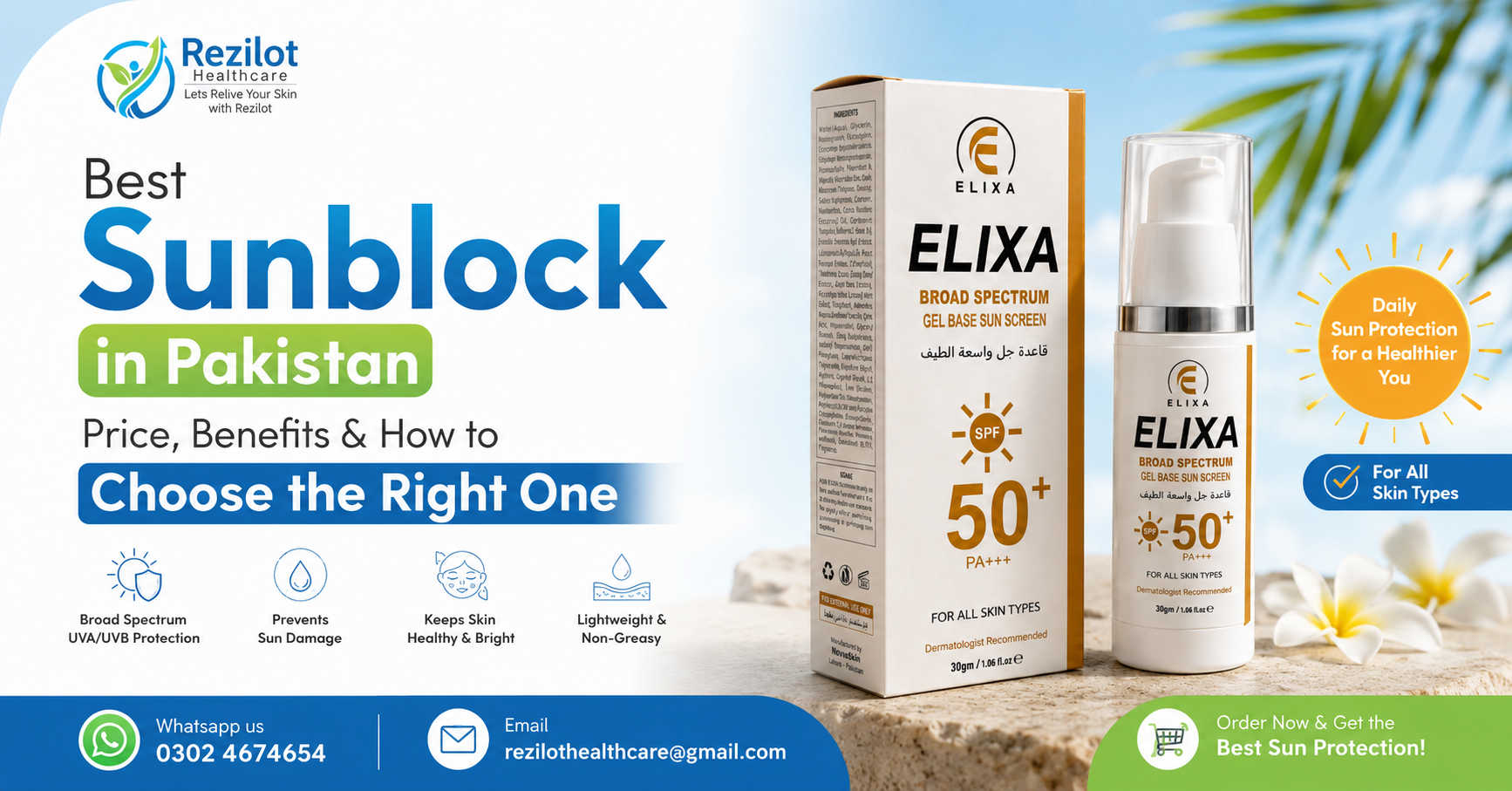
Best Sunblock in Pakistan: Price, Benefits & How to Choose the Right One
Best Sunblock in Pakistan: Price, Benefits & How to Choose the Right One
Finding the best sunblock in Pakistan sounds simple until you walk into a pharmacy, beauty store, or online marketplace and see dozens of choices promising SPF 50, broad-spectrum protection, whitening effects, oil control, hydration, anti-aging benefits, and everything in between. Then comes the real question: which one is actually right for your skin? A product that feels fantastic on dry skin may leave oily skin looking shiny within an hour, while a rich cream that works beautifully in winter can feel unbearably heavy during Pakistan’s hot and humid summer months. That is why choosing sunblock should not be based only on brand popularity or the number printed beside “SPF.” The formula, protection level, skin type, texture, ingredients, authenticity, and your daily exposure all matter.
For most people in Pakistan, daily sun protection is not something reserved for beach holidays or exceptionally sunny days. Strong sunlight can be encountered during a commute to work, a university trip, shopping, driving, outdoor exercise, or simply sitting beside a bright window. UVA and UVB radiation can contribute to tanning, uneven pigmentation, premature visible skin aging, and sunburn, while consistent protection is an important part of maintaining healthier-looking skin over time. A good sunblock therefore acts less like an occasional beauty product and more like a daily protective layer.
This guide explores the best sunblock in Pakistan, typical price considerations, major benefits, SPF ratings, suitable ingredients, different formulas, application techniques, and ways to choose according to your skin type. Rather than declaring one product universally superior, the goal is to help you understand what makes a sunblock a good choice for Pakistani weather and individual skin needs.
Why Sunblock Matters in Pakistan
Pakistan has a wide range of climates, from relatively cool northern regions to extremely hot and sunny areas in the south and plains. Even when temperatures are comfortable, ultraviolet radiation can still affect exposed skin. Many people make the mistake of associating sun protection with temperature: if the day does not feel extremely hot, they assume sunscreen is unnecessary. In reality, heat and ultraviolet exposure are different things. You can feel perfectly comfortable while your skin is still receiving UV radiation, which is why a consistent daytime protection habit makes more sense than using sunblock only when the weather feels scorching.
The biggest visible reason people use sunblock is often tanning and pigmentation, but protection has broader benefits. Repeated UV exposure can contribute to premature skin aging, including the development of fine lines, uneven tone, and loss of the skin’s youthful appearance. Sun exposure can also worsen some forms of hyperpigmentation, meaning that someone carefully using products for dark spots but skipping sunscreen may find that their progress is frustratingly slow. Think of skincare treatments as repairing or improving a wall while sun protection acts like the roof that helps prevent additional damage from reaching it.
For people who spend considerable time outdoors, sunscreen becomes even more important. Driving is a particularly interesting example because people sometimes assume that being inside a car completely protects them from sunlight. Vehicle glass provides significant protection from some UVB radiation, but UVA exposure can still occur depending on the glass and vehicle. Outdoor workers, students walking between classes, delivery riders, athletes, and people who regularly commute on motorcycles can have much greater cumulative exposure.
The ideal approach is not to search endlessly for the strongest-feeling product. Instead, look for a broad-spectrum sunscreen with an appropriate SPF, apply enough of it, and reapply when circumstances require it. Hats, sunglasses, shade, umbrellas, and protective clothing can also reduce exposure. Sunblock is one component of a complete sun-protection strategy, not a magical shield that makes unlimited sun exposure harmless.
The Difference Between Sunblock and Sunscreen
The terms sunblock and sunscreen are often used interchangeably in Pakistan, although they historically described different approaches to UV protection. “Sunblock” was traditionally associated with mineral ingredients that sit on the skin and help reflect, scatter, or absorb UV radiation, while “sunscreen” was commonly associated with chemical filters that absorb UV energy. Modern formulations make the distinction less straightforward because many products combine different types of filters and use sophisticated technologies.
For shoppers, the terminology is therefore less important than the information on the packaging. Instead of focusing on whether a bottle says “sunblock” or “sunscreen,” check whether it provides broad-spectrum protection, what SPF it offers, whether it is suitable for your skin type, and whether the product comes from a trustworthy source. A lightweight sunscreen can provide excellent protection, just as a mineral sunblock can provide excellent protection. The texture and filter system do not automatically determine whether one product is universally better.
Mineral formulas commonly use ingredients such as zinc oxide or titanium dioxide. They can be attractive choices for people with sensitive skin, although sensitivity depends on the complete formulation rather than one ingredient alone. Some modern mineral products are also formulated to reduce the obvious white cast associated with older mineral sunscreens.
Chemical or organic UV filters work differently by absorbing UV radiation. Many contemporary sunscreens combine multiple filters to achieve broad-spectrum protection while maintaining a lightweight, cosmetically elegant texture. This can be particularly useful in Pakistan, where heavy, greasy formulas may discourage regular use during hot weather.
Ultimately, the best “sunblock” is the one that gives appropriate protection and that you will actually apply generously and consistently. A theoretically excellent product sitting unused because it feels sticky is less useful than a well-formulated sunscreen that fits comfortably into your daily routine.
Understanding SPF and Broad-Spectrum Protection
SPF, or Sun Protection Factor, is one of the most visible numbers on a sunscreen bottle. You will commonly see products labeled SPF 30, SPF 50, or sometimes higher. It is tempting to assume that SPF 50 provides dramatically more protection than SPF 30, but the difference is more nuanced. SPF primarily relates to protection against UVB-induced sunburn under standardized testing conditions. It should not be interpreted as a simple percentage showing how long you can remain in the sun without consequences.
For everyday use, many dermatology organizations generally recommend using a sunscreen with SPF 30 or higher, particularly when significant sun exposure is expected. SPF 50 can provide a useful additional margin, especially for people who spend substantial time outdoors or are prone to burning or pigmentation. However, an SPF 50 product applied too thinly may provide substantially less protection than its label suggests. Quantity and reapplication matter enormously.
This is where broad-spectrum protection becomes important. A product marketed only around SPF may not tell you enough about its UVA protection. UVA radiation is associated with photoaging and can contribute to pigmentation, while UVB is strongly associated with sunburn. A good daily sunscreen should therefore protect against both rather than focusing on a single portion of the UV spectrum.
You should also remember that sunscreen is not designed to make you invulnerable. Swimming, sweating, rubbing the face, wiping with a towel, and prolonged outdoor exposure can reduce protection. Even a high-SPF sunscreen needs to be applied correctly. More expensive packaging cannot compensate for inadequate application.
For everyday Pakistani conditions, a practical starting point for many adults is a broad-spectrum SPF 30–50 sunscreen with a texture appropriate for their skin. Someone working outdoors for several hours may need a water-resistant formula and more frequent reapplication, while someone working indoors with limited daytime exposure may have different practical needs. The correct choice depends on your lifestyle as much as your skin.
UVA vs UVB: What Your Skin Actually Needs
If SPF is the number everyone talks about, UVA and UVB are the two terms more shoppers should understand. Ultraviolet radiation reaches the skin in different forms, and the two major categories relevant to everyday sunscreen use are UVA and UVB. They overlap in their effects but are not identical. This is why simply choosing the highest SPF on the shelf is not enough when you are trying to build a sensible sun-protection routine.
UVB is strongly associated with sunburn and plays a significant role in direct skin damage. SPF testing primarily evaluates protection against UVB-related erythema. If you spend a long afternoon outside without adequate protection and your skin turns red or burns, UVB is an important part of that story.
UVA has a longer wavelength and can penetrate deeper into the skin. It is associated with photoaging, including changes in skin texture, fine lines, and pigmentation. UVA can also contribute to tanning and uneven skin tone. Because UVA is not adequately represented by the SPF number alone, shoppers should look for products that specifically indicate broad-spectrum protection or provide a recognized UVA rating.
This distinction is particularly relevant for people concerned about melasma, dark spots, post-acne marks, and uneven pigmentation. Sunscreen does not magically erase pigmentation, but reducing UV exposure can help prevent existing discoloration from becoming more pronounced. Some products also contain additional ingredients aimed at supporting a more even-looking complexion, but those ingredients should be considered secondary to reliable UV protection.
A practical way to think about it is this: SPF helps answer “How well does this protect against UVB?” while broad-spectrum labeling helps answer the bigger question of whether the formula addresses both UVA and UVB. When shopping for the best sunblock in Pakistan, do not let a large SPF number distract you from the rest of the label.
Choosing Sunblock for Your Skin Type
Your skin type should have a major influence on your choice because the most protective sunscreen in the world is not a great practical choice if it causes irritation, excessive oiliness, dryness, breakouts, or discomfort. Pakistan’s climate makes this even more obvious. A formula that feels comfortable in a dry winter environment can become heavy and unpleasant in hot, humid weather. Conversely, an ultra-light gel may feel wonderful on oily skin but leave dry or sensitive skin uncomfortable.
For oily skin, look for lightweight gel, fluid, or oil-control formulas. Labels such as “non-comedogenic,” “matte,” or “oil-free” can be useful clues, although they are not guarantees that a particular product will suit everyone. If your sunscreen makes your face extremely shiny within minutes, you are less likely to use the recommended amount consistently.
People with dry skin may prefer creamier formulas containing moisturizing ingredients. Sunscreen can be part of the moisturizing step in a morning routine, although very dry skin may still benefit from a separate moisturizer underneath. Ingredients such as glycerin and other humectants can make a sunscreen feel more comfortable.
For sensitive skin, a fragrance-free formula may be worth considering, particularly if fragrances have caused irritation in the past. Mineral sunscreens containing zinc oxide can be an option for some sensitive-skin users, but “mineral” does not automatically mean irritation-free. Always consider the complete ingredient list and your personal history.
Combination skin often requires compromise. You might prefer a lightweight sunscreen that does not overload the oilier areas while still providing enough comfort for drier areas. People with acne-prone skin should focus on a sunscreen that feels breathable and does not consistently trigger breakouts.
The best approach is to choose based on skin behavior rather than marketing language. Ask yourself: Does my skin become oily? Does it feel tight? Do I get clogged pores? Do I experience stinging? Does the product pill under moisturizer or makeup? These practical observations can tell you more than a glamorous advertisement.
Best Ingredients to Look For
Reading a sunscreen ingredient list can feel like trying to decode a chemistry textbook, but you do not need to memorize every ingredient. Start by identifying the UV filters and then consider supporting ingredients that match your skin needs. Zinc oxide and titanium dioxide are common mineral filters. Chemical or organic filters vary considerably by product and region, and modern formulas may contain several filters working together to create broad-spectrum protection.
If your skin is dry, ingredients that support hydration can improve comfort. Glycerin, for example, is widely used as a humectant and can help attract water to the skin. Some formulations also include soothing or antioxidant ingredients, although these should not be allowed to distract from the primary purpose of sunscreen.
For oily or acne-prone skin, the texture is often just as important as the ingredient list. A lightweight fluid or gel may be more suitable than a thick occlusive cream. “Non-comedogenic” can be a helpful label, but individual reactions still vary. Acne is complex, and a sunscreen that works beautifully for one person may cause congestion for another.
People with pigmentation may encounter sunscreens containing niacinamide, antioxidants, or other tone-supporting ingredients. These can be useful additions, but sunscreen itself remains the foundation. No brightening ingredient can compensate for regularly leaving the skin unprotected under strong sunlight.
It is also wise to be cautious about products making exaggerated claims such as permanent whitening, instant transformation, or complete immunity from sun damage. A quality sunscreen should be evaluated primarily by its tested UV protection, formulation quality, tolerability, and authenticity.
Mineral vs Chemical Sunblock
The debate between mineral and chemical sunscreen is often presented as though one side is universally safe and the other is universally problematic. Real-world skincare is more complicated. Both categories can provide effective UV protection when properly formulated and used correctly. The more useful question is not “Which category wins?” but “Which formula provides reliable protection and works comfortably for my skin and lifestyle?”
Mineral sunscreens commonly use zinc oxide and/or titanium dioxide. They can be appealing to people who prefer mineral filters or have skin that does not tolerate certain chemical sunscreen formulations. Older mineral products were notorious for leaving a noticeable white cast, especially on deeper skin tones, but newer formulations have improved considerably. Nevertheless, the cosmetic appearance can still vary significantly from one product to another.
Chemical sunscreens use organic UV filters that absorb UV radiation. They are often formulated into lightweight fluids, gels, and invisible finishes that can be easier to wear under makeup or in hot weather. Modern sunscreen formulas may combine several filters to achieve broad-spectrum protection and improve stability.
Neither category automatically guarantees that a product will be comfortable or irritating. Fragrance, preservatives, solvents, and other components of the formula can influence how your skin reacts. Similarly, a mineral sunscreen can feel heavy or leave a cast, while a chemical sunscreen can be exceptionally elegant—or occasionally sting sensitive skin.
If you are uncertain, consider your priorities. Someone with sensitive eyes might prioritize a formula that does not cause eye discomfort. Someone with oily skin may prefer a lightweight chemical or hybrid fluid. Someone who strongly prefers mineral filters may choose a zinc-oxide-based product. Consistency beats ideology here: the sunscreen you can comfortably apply in the recommended amount every day is often the more useful choice.
Best Sunblock in Pakistan by Budget
The price of sunblock in Pakistan can vary dramatically depending on brand, formulation, size, imported-versus-local availability, retailer, promotions, and currency fluctuations. Premium international products can be considerably more expensive than locally manufactured or budget-friendly alternatives. Because prices change frequently, it is better to treat online and pharmacy prices as moving targets rather than assuming a single permanent price.
A common mistake is thinking that expensive sunscreen automatically provides better protection. Price can reflect research, packaging, cosmetic elegance, imported ingredients, brand positioning, distribution costs, and marketing—not simply SPF performance. A reasonably priced sunscreen from a reputable manufacturer can be a perfectly sensible choice if it offers appropriate broad-spectrum protection and suits your skin.
At the budget end, shoppers should pay particular attention to authenticity and storage conditions. A suspiciously cheap imported sunscreen may not necessarily be a bargain. It could be old stock, improperly stored, counterfeit, or simply sold through an unreliable channel. Buying from a reputable pharmacy, authorized retailer, or established seller can sometimes be more important than saving a small amount of money.
Mid-range sunscreens can offer a useful balance between cost and cosmetic elegance. Premium formulas may be worthwhile for people who struggle to tolerate ordinary sunscreens, need specialized textures, or simply prefer a particular finish. However, the best value is ultimately determined by how consistently you use the product.
If you are comparing products, calculate the cost per usable amount, not just the price of the tube. A tiny bottle that costs less upfront may not actually be cheaper if you need to replace it frequently. Likewise, a large bottle may represent better value if you use enough product to achieve the labeled protection.
Because Pakistani retail prices can change, always verify the current price from a trusted local retailer or pharmacy before purchasing.
Premium, Mid-Range, and Affordable Options
Budgeting for sunscreen becomes easier when you think in categories rather than chasing one “perfect” product. Affordable formulas can work very well for everyday use when they provide appropriate broad-spectrum protection and agree with your skin. Mid-range products often offer improved textures, better finishes, or specialized formulas for oily, acne-prone, dry, or sensitive skin. Premium sunscreens may focus heavily on cosmetic elegance and advanced formulations.
The important point is that SPF performance should come first. If two products both offer appropriate broad-spectrum protection, the more expensive one is not automatically safer. You are paying for the complete formula and experience, not simply the SPF number.
For students or families managing a tight skincare budget, a reliable affordable sunscreen is usually more practical than buying an expensive product and applying too little to make it last. Sunscreen needs to be applied generously enough to provide the protection claimed by the manufacturer. Trying to stretch a product for months by using tiny amounts defeats the purpose.
For people with special concerns—such as persistent pigmentation, very sensitive skin, frequent outdoor exposure, or difficulty finding a non-greasy texture—a more expensive product may be worthwhile if it dramatically improves adherence. The best sunscreen is partly a behavioral choice. If one formula makes you happy to use sunscreen every morning, that advantage has real value.
When comparing options in Pakistan, consider the product size, seller reliability, expiry information, storage conditions, formulation, SPF, UVA protection, and suitability for your skin alongside the price. A low price should never be the only deciding factor.
Popular Sunblock Options Available in Pakistan
Pakistan’s market includes a mixture of local, regional, and international sunscreen brands. Availability can differ between cities and online stores, and imported products can move in and out of stock. Rather than presenting one permanent “best” list, it makes more sense to understand the types of products shoppers commonly encounter.
Pharmacies and established skincare retailers may carry dermatology-focused products from international brands such as La Roche-Posay, Bioderma, Eucerin, Avène, ISDIN, and Heliocare, depending on current local availability. These brands often have multiple sunscreen textures, so even within one brand, one product may be better suited to oily skin while another is designed for dry or sensitive skin.
Pakistan also has local and regional skincare brands offering SPF products at different price points. These can be attractive for shoppers who want easier availability and lower costs. The key is to assess the product based on its labeling, manufacturer information, stated protection, formulation, and seller credibility rather than assuming that imported automatically means superior.
Some shoppers specifically seek Korean sunscreens because of their lightweight textures and elegant finishes. These can be excellent cosmetic options, but authenticity is crucial because popular imported skincare products are also frequent targets for counterfeit selling. Always consider the seller before placing an order.
It is also important to separate sunscreen from products that merely contain a small amount of SPF. A day cream or foundation labeled SPF may not necessarily be enough for intentional sun protection because people generally apply much less makeup or moisturizer than the quantity used during sunscreen testing.
Instead of asking, “What is the single best brand?” ask, “What is the best formula for my skin, exposure level, and budget?” That question leads to a much more useful purchase.
How to Check Whether a Sunblock Is Genuine
Authenticity deserves special attention when buying sunblock in Pakistan, particularly for imported products sold through social media pages or unfamiliar online stores. Counterfeit skincare can look remarkably convincing. Packaging, logos, fonts, colors, and even batch information may be copied, making visual inspection alone imperfect.
Start with the seller. Established pharmacies, reputable skincare retailers, official brand channels, and authorized distributors generally provide greater confidence than anonymous marketplace sellers. If the price is dramatically below what reputable sellers charge, stop and investigate before purchasing. A huge discount is not automatically proof of counterfeit goods, but it is a reason to ask questions.
Check the packaging for obvious inconsistencies, including spelling mistakes, unusual fonts, poor printing, damaged seals, missing manufacturer information, or suspicious labels. Examine the batch number and expiry information where applicable. However, remember that counterfeiters can copy batch numbers too, so packaging inspection should be combined with seller verification.
Pay attention to the actual product. A sudden change in smell, color, texture, separation, or consistency compared with a product you have previously purchased can be a warning sign, although legitimate reformulations can also change appearance. If your skin experiences an unusual reaction, stop using the product and seek professional advice if the reaction is significant.
Do not rely entirely on viral “fake sunscreen tests” posted online. Home tests cannot reliably reproduce professional sunscreen testing and may produce misleading conclusions. The strongest protection comes from buying through a trustworthy supply chain.
When ordering online, keep your invoice and product information. If something appears suspicious, contact the retailer or manufacturer rather than continuing to use a product you do not trust.
How to Apply Sunblock Correctly
Even an excellent sunscreen can underperform when too little is applied. This is one of the biggest reasons people believe that a product “doesn’t work.” Sunscreen testing is performed using a standardized amount, while consumers often apply a much thinner layer. The result is a gap between the protection printed on the package and the protection the person actually receives.
For the face and exposed neck, many dermatology professionals use practical quantity methods such as the two-finger approach, where sunscreen is dispensed along two fingers before being spread over the relevant areas. The exact amount required depends on the product and the area being covered, but the underlying principle is simple: do not use a tiny pea-sized amount and expect maximum labeled protection.
Apply sunscreen as the final step of your morning skincare routine, after moisturizer if you use one. Give skincare products enough time to settle when necessary, especially if layering causes pilling. Spread sunscreen evenly across the face, ears, neck, and other exposed areas rather than concentrating it only on the center of the face.
Do not forget areas people frequently miss, such as the ears, hairline, neck, and hands. If your lips are exposed, use a lip product formulated with sun protection. For people who drive regularly, hands and forearms can receive considerable daytime exposure as well.
Sunscreen should generally be applied before going outdoors rather than waiting until you are already in direct sunlight. If you are sweating heavily, swimming, exercising outdoors, or wiping your face frequently, you may need to reapply sooner.
Most importantly, don’t let a complicated routine become an excuse for skipping sunscreen. A simple routine you follow consistently is more valuable than a ten-step plan that remains untouched on the bathroom shelf.
When and How Often to Reapply Sunblock
The famous “reapply every two hours” advice is a useful general rule for people spending time outdoors, but real life requires context. Reapplication becomes particularly important after swimming, heavy sweating, towel drying, or wiping the face. Water-resistant products can maintain protection during certain conditions, but “water-resistant” does not mean waterproof forever.
If you spend most of your working day indoors with limited direct sunlight, your practical needs may differ from those of someone spending six hours outside. However, prolonged outdoor exposure should prompt regular reapplication. People who commute, exercise, work outdoors, or attend long daytime events should be especially careful.
Reapplication over makeup can seem impossible, which is why choosing the right sunscreen texture from the beginning helps. Some people prefer sunscreen sticks, sprays, powders, or lightweight fluid formulas for touch-ups, but these products should be used according to their instructions and should not encourage inadequate application. A convenient format is useful only if enough product reaches the skin.
Do not confuse high SPF with all-day protection. SPF 50 does not mean you can apply it once in the morning and forget about it until bedtime. Sunlight, sweat, friction, and time affect the protective layer.
For outdoor activities, combine sunscreen with physical protection. A wide-brimmed hat, sunglasses, shade, long sleeves, and an umbrella can reduce the amount of UV reaching the skin. This is especially useful during periods of intense sunlight.
The goal isn’t perfection. It is to create a routine that matches your exposure. Apply enough, protect exposed areas, and reapply when exposure or product removal makes it necessary. That approach is far more useful than obsessing over tiny differences between SPF numbers.
Best Sunblock for Pakistan’s Hot and Humid Weather
Hot weather changes the sunscreen game. A thick, greasy formula may look beautiful when first applied but become uncomfortable after an hour in heat. Sweat can make the product migrate toward the eyes, while humidity can make an already oily complexion look even shinier. When sunscreen feels unpleasant, people naturally tend to apply less or skip it altogether.
For hot and humid Pakistani weather, lightweight textures such as fluids, gels, lightweight lotions, and water-based-feeling formulas are often easier to tolerate. People with oily skin may prefer a matte or natural finish, while those with dry skin may appreciate a more moisturizing lotion. The ideal texture is highly personal.
If you sweat heavily, consider a sunscreen labeled water-resistant when appropriate for your activities. Remember that water resistance is tested for specific durations and does not eliminate the need for reapplication. Outdoor sports, swimming, and prolonged exposure require a more deliberate protection strategy than sitting indoors.
Climate also affects skincare layering. If your moisturizer is rich and your sunscreen is rich, the combination may feel excessive. You may be able to simplify the morning routine by choosing a sunscreen that already provides enough hydration. On the other hand, people with very dry skin may still need moisturizer beneath sunscreen.
Another useful consideration is eye comfort. A sunscreen that repeatedly runs into your eyes during sweating is unlikely to become your favorite product. Trying a small amount and observing how the formula behaves throughout the day can be more informative than reading dozens of reviews.
Pakistan’s weather is not identical throughout the country or year. A sunscreen that feels perfect in Islamabad during a cooler month may feel very different in Karachi’s humidity or Lahore’s summer heat. Choose for your actual environment, and don’t be afraid to have different formulas for different seasons if your budget allows.
Sunblock for Oily and Acne-Prone Skin
People with oily or acne-prone skin often approach sunscreen with suspicion. They may have experienced products that feel greasy, clog pores, make existing acne look worse, or leave a shiny film that they dislike. Unfortunately, skipping sunscreen can create another problem because UV exposure can worsen the appearance of pigmentation left behind after acne.
For oily skin, start with lightweight, non-greasy formulas. Gel, fluid, and oil-control products can be easier to wear than heavy creams. Look for formulations marketed as non-comedogenic, but remember that this label is not an absolute guarantee. Your individual skin chemistry matters.
Acne-prone users should also avoid the temptation to aggressively scrub sunscreen away. A gentle cleanser is generally preferable to harsh physical exfoliation. Over-cleansing can irritate the skin barrier, potentially making the face more uncomfortable and reactive.
If you use acne treatments such as retinoids or exfoliating acids, sunscreen becomes especially relevant because some acne regimens can make skin more sensitive or irritated. Your dermatologist can help coordinate treatment with appropriate sun protection.
For people with oily skin, the finish matters almost as much as the SPF. A sunscreen that dries down comfortably can reduce the temptation to skip application. If you wear makeup, a non-greasy sunscreen may also reduce foundation separation and excess shine.
Remember that acne does not mean you should avoid sunscreen. Instead, find a formula that works with your routine. If a particular product repeatedly causes breakouts, stop using it and try another formulation rather than abandoning sun protection altogether.
Sunblock for Dry and Sensitive Skin
Dry and sensitive skin requires a different strategy. If your face already feels tight, flaky, or irritated, an alcohol-heavy or otherwise uncomfortable sunscreen can make the morning routine feel like punishment. The result is predictable: you use less than you should or stop using it completely. A comfortable sunscreen is therefore particularly important for this skin type.
People with dry skin may benefit from moisturizing sunscreen formulas containing ingredients designed to support hydration. Depending on your needs, you may still want a moisturizer underneath. Applying sunscreen over adequately moisturized skin can also improve the overall appearance of flaky patches.
Sensitive skin requires a little more caution. Look for a formula that your skin tolerates and consider avoiding unnecessary fragrance if fragrance tends to irritate you. Mineral formulas containing zinc oxide can be worth considering, although the complete formulation determines whether a product is suitable.
When introducing a new sunscreen, do not immediately combine it with five other new skincare products. If irritation develops, you want to know which product caused it. A simple routine makes troubleshooting much easier.
People with conditions such as eczema, rosacea, persistent dermatitis, or severe sensitivity may need individualized medical guidance. Sunscreen is important, but a dermatologist can help identify formulas that fit your specific condition.
The goal for dry or sensitive skin is protection without sacrificing the skin barrier. Look for comfort, adequate hydration, gentle formulation, and broad-spectrum protection. If your sunscreen leaves your skin calm enough that you happily use it every morning, you have already solved one of the biggest challenges of sun protection.
Can You Wear Sunblock Under Makeup?
Yes, sunscreen can be incorporated under makeup, and doing so can make daily sun protection much easier for people who wear cosmetics. The trick is choosing compatible textures and allowing each layer to settle appropriately. A sunscreen that pills underneath foundation can make the entire routine frustrating, while an elegant fluid formula can disappear beneath makeup surprisingly well.
Start with your usual skincare products, followed by sunscreen. Apply enough sunscreen to cover the exposed areas rather than reducing the amount simply because you plan to wear foundation. Makeup should not be treated as a substitute for sunscreen unless it is applied in a quantity that provides the labeled protection—which is generally unrealistic for most cosmetic products.
Give sunscreen a little time to settle before applying foundation if your particular products tend to move around. Use gentle pressing motions rather than aggressively rubbing multiple layers together. If your skin is oily, a sunscreen with a natural or matte finish may make makeup application easier.
Throughout the day, reapplication presents the bigger challenge. Depending on your circumstances, you may need to use a compatible sunscreen product over makeup or remove and reapply makeup when substantial outdoor exposure is expected. Sunscreen sticks and certain mist formats can be convenient, but coverage can be uneven if insufficient product is used.
For someone who spends most of the day outdoors, makeup should be viewed as an addition, not the primary sun-protection strategy. Sunglasses, hats, shade, and properly applied sunscreen remain important.
If your makeup constantly pills over sunscreen, don’t automatically blame sunscreen itself. Your moisturizer, primer, foundation, application technique, or incompatible product textures may be contributing. Experiment with your layering order and quantities until you find a routine that behaves well.
Common Sunblock Mistakes to Avoid
Many sunscreen problems come from application habits rather than the sunscreen itself. The first common mistake is using too little. A thin smear across the face may look elegant, but sunscreen requires sufficient coverage to provide the protection indicated by its testing.
Another mistake is applying sunscreen only on exceptionally sunny days. UV exposure does not disappear because the sky looks cloudy or because winter has arrived. If you have a daily habit of daytime sun exposure, consistent protection makes more sense.
People also forget exposed areas. The ears, neck, hands, and hairline are easy to overlook. Someone may have an elaborate facial skincare routine while completely ignoring their hands and neck, creating a noticeable difference over time.
A fourth mistake is believing that SPF 50 means no reapplication is necessary. It doesn’t. Sweat, water, friction, and extended outdoor exposure can compromise the sunscreen layer.
Buying from unreliable sellers is another risk. An authentic product can only perform according to its formulation; counterfeit or improperly stored products introduce unnecessary uncertainty. When possible, purchase from reputable retailers.
Finally, don’t judge sunscreen solely by how it feels for five minutes. Observe how your skin behaves after several hours. Does it sting? Become excessively greasy? Trigger breakouts? Cause pilling? If so, that may be a sign that the formula isn’t right for you.
Good sun protection is not about finding a miraculous bottle. It is about avoiding these small mistakes consistently.
Building a Simple Daily Sun-Protection Routine
A good morning routine does not need to be complicated. For many people, the foundation can be surprisingly simple: gentle cleansing, appropriate skincare or moisturizer, sunscreen, and physical protection when needed. The exact routine depends on your skin and other products you use, but sunscreen should have a reliable place in your daytime habits.
Apply sunscreen generously to exposed skin as the final skincare step before makeup. If you are using a moisturizer, let it settle enough that the sunscreen spreads evenly. Don’t mix sunscreen into moisturizer in your hand as a shortcut unless the manufacturer specifically instructs you to do so; mixing can change the amount and distribution of sunscreen filters on the skin.
On ordinary indoor days, your routine may be straightforward. On outdoor days, think beyond the bottle. A hat, sunglasses, shade, protective clothing, and timing outdoor activities away from periods of intense sun can all reduce exposure.
If you struggle to remember sunscreen, attach it to something you already do every morning. Put it next to your toothbrush, skincare products, or coffee machine. Habits become easier when they have a consistent trigger.
And don’t let the pursuit of the best sunblock in Pakistan turn into endless product switching. Once you find a trustworthy sunscreen that suits your skin, provides appropriate broad-spectrum protection, fits your budget, and feels comfortable, consistency is more valuable than constantly chasing the newest launch.
Conclusion
Choosing the best sunblock in Pakistan is ultimately less about finding one universally perfect brand and more about matching the right product to your skin, climate, lifestyle, and budget. A good starting point is a broad-spectrum SPF 30 or higher sunscreen, with SPF 50 often being a practical choice for people who experience substantial outdoor exposure. From there, texture and formulation become personal: oily skin may prefer lightweight gel or fluid formulas, dry skin may benefit from moisturizing options, and sensitive skin may favor gentle, fragrance-free formulations or mineral filters.
Price matters, but it should not be the only factor. A reliable affordable sunscreen can be a better investment than an expensive product you apply inconsistently. At the same time, paying more can make sense if a premium formula solves a specific problem such as greasiness, pilling, irritation, or poor makeup compatibility.
Most importantly, how you use sunscreen matters almost as much as which sunscreen you buy. Apply enough, cover exposed areas, reapply during prolonged outdoor exposure or after swimming and heavy sweating, and combine sunscreen with shade, clothing, hats, and sunglasses. If you can make those habits part of your everyday routine, you are already making a meaningful investment in the long-term health and appearance of your skin.
FAQs About the Best Sunblock in Pakistan
1. Which is the best sunblock in Pakistan?
There is no single sunscreen that is best for everyone. For most adults, look for a reputable product offering broad-spectrum SPF 30–50 or higher, then choose the texture according to your skin type. Oily skin often prefers lightweight gels or fluids, while dry skin may prefer moisturizing creams. Sensitive skin may benefit from fragrance-free formulas and, for some people, mineral filters. Authenticity is also essential, so buy from a trustworthy retailer.
2. What is the best SPF for Pakistan?
An SPF 30 or higher is a practical starting point for everyday protection, while SPF 50 can provide additional protection and may be particularly useful for people who spend significant time outdoors. The SPF number alone is not enough; broad-spectrum UVA protection and correct application are also important. Applying too little sunscreen reduces the protection you actually receive.
3. How much does sunblock cost in Pakistan?
Sunblock prices vary considerably according to brand, size, formulation, origin, retailer, and exchange-rate conditions. Affordable local products can cost considerably less than imported dermatology or premium brands. Because prices change frequently, check current prices at reputable pharmacies and established online retailers before purchasing. Avoid choosing a product solely because it is unusually cheap.
4. Is SPF 50 better than SPF 30?
SPF 50 provides a higher level of UVB protection under standardized testing than SPF 30, but the difference does not mean SPF 50 allows unlimited sun exposure. Both require adequate application and reapplication. Broad-spectrum protection is also important because SPF primarily communicates UVB protection. For substantial outdoor exposure, many people prefer SPF 50 as an additional margin of protection.
5. Which sunblock is best for oily skin?
Oily skin generally does well with lightweight, non-greasy, gel, fluid, or oil-control sunscreen formulas. Look for products marketed as non-comedogenic or suitable for oily and acne-prone skin. However, labels are not guarantees, so observe how your skin responds. The ideal product should protect your skin without making you so uncomfortable that you stop applying enough.
6. Which sunblock is best for dry skin?
Dry skin often benefits from a moisturizing sunscreen that leaves the skin comfortable rather than tight or flaky. Ingredients that support hydration can be useful. You can also apply a moisturizer underneath if necessary. Choose a formula that provides broad-spectrum protection while fitting comfortably into your existing skincare routine.
7. Can sunscreen prevent tanning?
Sunscreen can help reduce UV exposure that contributes to tanning, but it cannot guarantee that your skin will never tan. Protection is most effective when sunscreen is applied generously and combined with shade, clothing, and other protective measures. If pigmentation is a concern, consistency becomes particularly important.
8. Is mineral sunscreen better than chemical sunscreen?
Neither type is universally better. Mineral sunscreens commonly use zinc oxide or titanium dioxide, while chemical sunscreens use organic UV filters. Both can provide effective protection when properly formulated. Your skin sensitivity, preferred texture, cosmetic finish, and lifestyle should guide the decision.
9. Can I use sunblock every day?
Yes. Daily sunscreen use is appropriate for people who have regular daytime UV exposure. Applying sunscreen consistently can help reduce cumulative UV exposure and support the prevention of sunburn and photoaging. It should be considered part of a broader sun-protection routine rather than an occasional beauty treatment.
10. Should I apply moisturizer before sunscreen?
If your skin needs moisturizer, it is generally applied before sunscreen in a morning skincare routine. Allowing the moisturizer to settle can help reduce pilling. Some sunscreens are moisturizing enough to eliminate the need for a separate moisturizer, particularly for oily or combination skin.
11. Can I wear makeup over sunblock?
Yes. Sunscreen can generally be worn under makeup. Apply an adequate amount of sunscreen first and allow it to settle before applying foundation or other cosmetics. Makeup containing SPF should not automatically be considered a replacement for dedicated sunscreen because most people do not apply enough makeup to achieve its labeled SPF.
12. How often should I reapply sunblock?
For prolonged outdoor exposure, a common recommendation is to reapply about every two hours, and sooner when swimming, sweating heavily, towel drying, or wiping the skin. Your actual needs depend on exposure and the product’s instructions. Indoor exposure with minimal direct sunlight is different from spending hours outside.
13. Can sunscreen remove dark spots?
Sunscreen does not directly remove existing dark spots, but it can help prevent UV exposure from worsening pigmentation. This makes it an important part of a routine for uneven skin tone. Other treatments may be needed to address established pigmentation, particularly persistent melasma or post-inflammatory hyperpigmentation.
14. Is expensive sunblock always better?
No. Price does not automatically determine sunscreen quality. Expensive products may offer elegant textures, specialized formulations, or imported ingredients, but an affordable sunscreen can still be a good choice if it provides appropriate protection and suits your skin. Consistency and adequate application are crucial.
15. How can I tell if a sunblock is fake in Pakistan?
Purchase from reputable pharmacies, established skincare retailers, official channels, or trustworthy distributors whenever possible. Examine packaging, manufacturer details, batch information, expiry information, seals, and product consistency. Be cautious about unusually low prices. Packaging checks alone cannot guarantee authenticity, so seller reliability is particularly important.
16. Can I use the same sunblock on my face and body?
Yes, if the product is designed for both areas and your skin tolerates it. However, facial sunscreens are often formulated with lighter textures and ingredients selected for cosmetic elegance. Body sunscreens may be richer or more economical for covering larger areas. For acne-prone facial skin, a dedicated facial formula may be more comfortable.
17. Is SPF 100 necessary in Pakistan?
For most people, SPF 100 is not necessary for everyday use. A properly applied broad-spectrum SPF 30–50+ sunscreen can provide substantial protection. Higher SPF products may be useful in particular circumstances, but no SPF eliminates the need for adequate application, reapplication, and other protective measures.
18. Can I skip sunscreen on cloudy days?
Clouds do not completely eliminate ultraviolet exposure. Depending on the weather and UV conditions, significant UV radiation can still reach the skin. If you will be outdoors during the daytime, especially for an extended period, maintaining your normal sun-protection routine is sensible.
19. What is the best sunblock for acne-prone skin in Pakistan?
Look for a lightweight, non-comedogenic sunscreen with a finish you can comfortably wear every day. Gel and fluid formulas are often popular among oily or acne-prone users. If a sunscreen consistently causes congestion, try a different formulation rather than abandoning sun protection. Persistent acne should be evaluated by a qualified dermatologist.
20. Is sunscreen enough to protect my skin from the sun?
Sunscreen is important, but it should not be your only defense. During strong sun exposure, combine it with shade, sunglasses, protective clothing, hats, and sensible timing of outdoor activities. Sunscreen works best as one layer of a broader sun-protection strategy.

Leave a Reply