
No products in the cart.
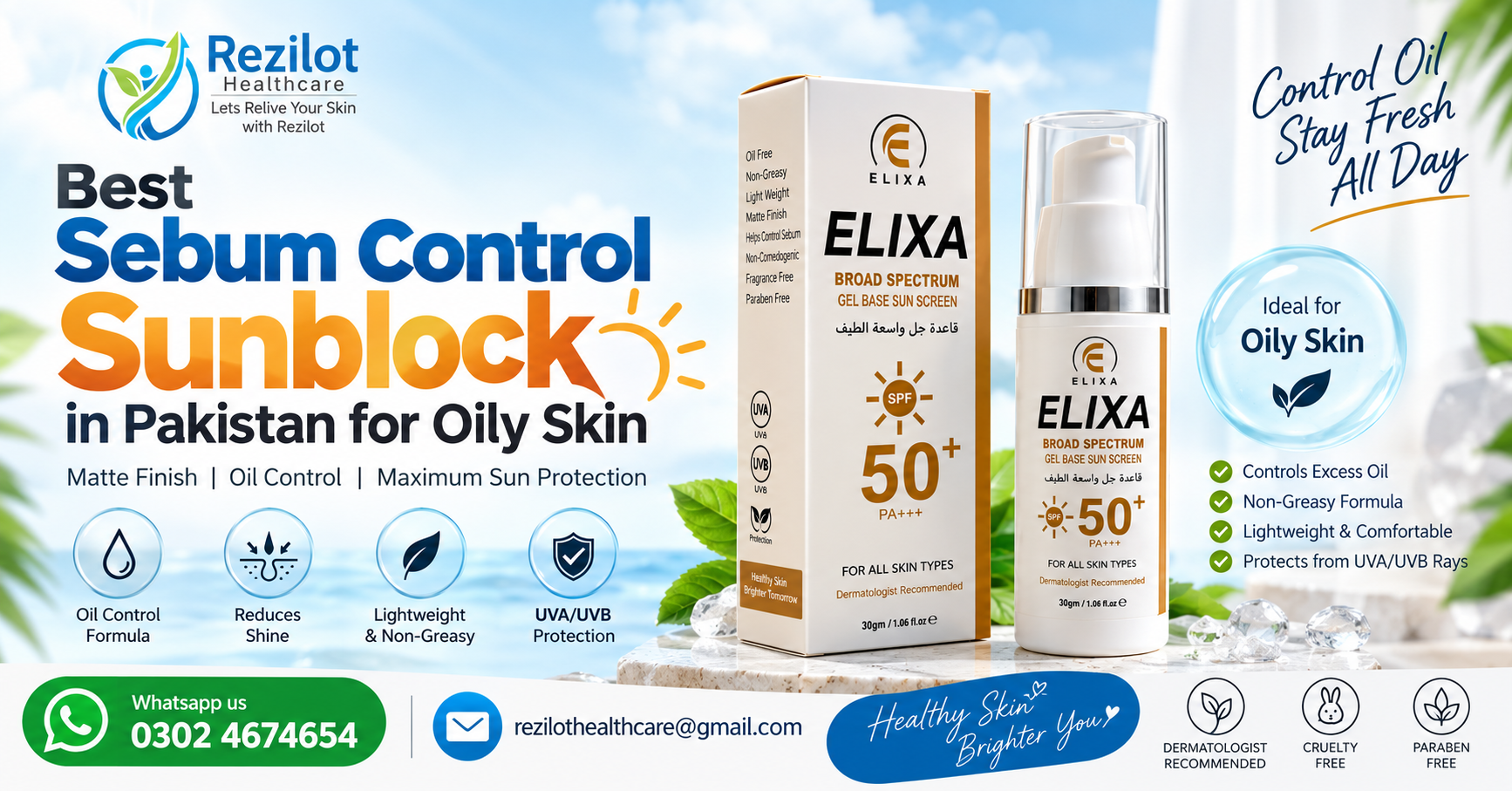
Best Sebum Control Sunblock in Pakistan for Oily Skin
Best Sebum Control Sunblock in Pakistan for Oily Skin
Finding the best sebum control sunblock in Pakistan for oily skin can feel like trying to keep ice from melting on a Karachi afternoon. You apply sunscreen in the morning hoping for a clean, matte complexion, but a couple of hours later your forehead is shining, your nose feels greasy, and whatever makeup you applied seems ready to slide away. If your skin is acne-prone as well, choosing the wrong sunscreen can make the situation even more frustrating. A thick or greasy product may feel uncomfortable and can make already-oily skin appear even shinier.
That does not mean people with oily skin should avoid sunscreen. Quite the opposite. Daily protection from ultraviolet radiation is an important part of protecting the skin from sunburn, premature photoaging, uneven pigmentation, and other effects of UV exposure. The trick is choosing a formula that provides effective protection without making oily skin feel unnecessarily heavy or greasy.
For Pakistani consumers, this becomes particularly important because sunscreen often has to perform in hot, humid, dusty, and sweat-inducing conditions. Someone commuting in Lahore has different practical concerns from someone spending most of the day in an air-conditioned office, while a person living through Karachi’s humid summer may prioritize a dry-touch finish above almost everything else. Product availability and prices also vary significantly between pharmacies and online stores.
So what should you actually buy? Rather than judging a product only by the word “sunblock” on its packaging, look at its SPF, UVA protection, texture, finish, ingredient list, authenticity, and suitability for acne-prone skin. This guide explains those factors and looks at popular sebum-control sunscreen options available in the Pakistani skincare market.
Why Oily Skin Needs a Specialized Sebum Control Sunblock
Oily skin produces more sebum than is necessary to keep the skin naturally lubricated. Sebum itself is not the enemy—it forms an important part of the skin’s protective environment—but excessive oil production can leave the face shiny and may accompany clogged pores and acne. Now imagine putting a rich, oily sunscreen layer over that skin. Even if the sunscreen provides excellent UV protection, you may dislike wearing it enough that you start skipping applications altogether.
That is where sebum control sunscreen becomes useful. These formulas are generally designed to provide sun protection while reducing the greasy sensation associated with traditional creams. Some use lightweight emulsions, gels, silicones, powders, or oil-absorbing ingredients to produce a smoother and more matte finish. The exact formulation matters much more than marketing terms such as “oil-free” printed on the front of a box.
A good sunscreen for oily skin should disappear into your routine rather than constantly remind you that it is sitting on your face. You should be able to apply an adequate amount without feeling as though you have coated your face in cooking oil. At the same time, extreme mattification is not necessarily better. A sunscreen that dries the skin aggressively can feel tight or uncomfortable, particularly when someone is simultaneously using acne treatments such as retinoids or exfoliating acids.
The sweet spot is therefore effective broad-spectrum protection plus comfortable oil management. When a sunscreen feels pleasant enough to use consistently, daily protection becomes much easier.
How Pakistan’s Climate Affects Oily and Acne-Prone Skin
Pakistan does not have one uniform climate, yet high temperatures are a common sunscreen challenge across much of the country. Karachi combines heat with significant humidity, while Lahore can experience intensely hot summers. Islamabad has seasonal variation, and areas of Balochistan, Khyber Pakhtunkhwa, Gilgit-Baltistan, and northern Pakistan present their own combinations of altitude, temperature, dryness, and UV exposure.
Heat itself can make a heavy skincare routine feel unbearable. Add perspiration, outdoor commuting, pollution, helmets, scarves, masks, makeup, or facial hair, and a thick sunscreen can quickly become uncomfortable. People with naturally oily skin often notice that their faces look shinier as the day progresses, which makes matte and dry-touch sunscreen formulas particularly appealing.
Sweating also raises another issue: durability. If you are outdoors, exercising, swimming, or sweating heavily, look for a sunscreen specifically labeled water-resistant and follow its reapplication instructions. “Sebum control” and “water resistant” describe different characteristics; one does not automatically guarantee the other.
Climate should also influence the rest of your routine. Applying several rich serums, a heavy moisturizer, and then sunscreen may overwhelm oily skin even when the sunscreen itself is lightweight. A streamlined morning routine often performs better.
Why Regular Sunscreens Can Feel Heavy on Oily Skin
Traditional sunscreen creams can contain emollients and other ingredients that create a richer texture. Those characteristics are not inherently bad. In fact, someone with dry skin might love exactly the formula that a person with extremely oily skin finds unbearable. Sunscreen is therefore less about finding a universally “good” texture and more about finding one you can comfortably apply at the necessary amount.
For oily skin, heavier products can produce a visibly glossy finish. Add natural sebum throughout the day and the glow can quickly become unwanted shine. Some people then compensate by applying too little sunscreen, which undermines the protection they were trying to achieve.
This explains the popularity of gel, fluid, matte, oil-control, and dry-touch sunscreens. They are often easier to spread in a thin, even layer and can sit more comfortably beneath makeup. Certain formulas incorporate absorbent powders or ingredients that soften the appearance of shine, giving the face a more velvety finish.
Do not assume, however, that every gel is automatically non-comedogenic or that every cream will clog pores. Formulations are complicated, and acne triggers vary between individuals. Judge the complete product and how your own skin responds.
What Makes a Sunblock Good for Sebum Control?
A great oily-skin sunscreen has to perform two jobs simultaneously: provide reliable UV protection and remain cosmetically acceptable on oilier complexions. Protection should always come first. A beautifully matte product is not useful if it fails to provide appropriate UVA and UVB protection.
Look for a clearly stated SPF rating and broad-spectrum/UVA protection information. SPF primarily indicates protection against UVB under standardized testing conditions. UVA protection is also important, particularly when your concerns include pigmentation and photoaging.
Then consider texture. Lightweight fluids, gels, gel-creams, and dry-touch emulsions often work particularly well for oily complexions. If acne is a concern, non-comedogenic labeling can also be helpful, although it cannot guarantee that no individual will break out.
Finally, think about real life. Does it pill underneath makeup? Does it leave a noticeable white cast on your complexion? Can you afford to repurchase it frequently enough to use it properly? A sunscreen that looks impressive on paper but is too expensive to apply generously may not be your most practical choice.
Look for a Matte or Dry-Touch Finish
A matte finish is one of the first characteristics oily-skin users tend to seek, and for understandable reasons. A properly formulated matte sunscreen can reduce the immediate glossy appearance produced by sunscreen while helping the complexion remain visually balanced for longer.
The important distinction is between matte and dehydrating. Oily skin can still be dehydrated. If your sunscreen makes your face sting, flake, or feel painfully tight, that is not an achievement in sebum control. It may simply be unsuitable for your skin.
Texture also influences how sunscreen behaves under makeup. A smooth dry-touch product can sometimes act almost like a primer, whereas greasy sunscreen may make foundation separate more quickly. Allowing sunscreen to settle before applying makeup can improve the result.
If you are shopping online, look beyond promotional words and check independent descriptions of the texture. When possible, purchasing from a reputable pharmacy or authorized seller also gives you better protection against counterfeit or poorly stored skincare.
Choose Non-Comedogenic and Lightweight Formulas
If you have both oily and acne-prone skin, non-comedogenic sunscreen is a sensible starting point. The term generally indicates that a product has been formulated with pore-clogging concerns in mind, although individual reactions remain possible.
Lightweight consistency matters for another reason: compliance. Imagine two sunscreens offering suitable protection. One feels thick, greasy, and uncomfortable; the other spreads easily and settles quickly. Which one are you realistically going to apply every morning and reapply when necessary? Comfort matters because sunscreen only works when you actually wear enough of it.
Acne-prone users should introduce new products carefully. If your skin is highly reactive, patch testing can help identify obvious irritation before you spread a new product over your entire face. People being treated for persistent or severe acne should discuss skincare choices with a qualified dermatologist, particularly when prescription medications are involved.
Remember that oil-free does not automatically mean irritation-free, and natural does not automatically mean safer. Evaluate the complete formulation rather than relying on a single marketing claim.
Prioritize Broad-Spectrum SPF 50 Protection
For strong everyday sun protection, broad-spectrum SPF 50 is a practical target, especially for people exposed to substantial sunlight. Higher SPF should not be treated as permission to use less product, stay outside indefinitely, or forget reapplication. Sunscreen remains only one part of sensible sun protection.
Broad-spectrum coverage matters because sunlight contains both UVA and UVB radiation that affect the skin differently. UVB is strongly associated with sunburn, while UVA contributes substantially to photoaging and can worsen the appearance of pigmentation. For people dealing with post-acne marks, preventing unnecessary UV exposure is particularly relevant because pigmentation can become more persistent.
Also use physical protection when practical. Shade, sunglasses, hats, appropriate clothing, and avoiding unnecessary exposure during intense sunlight all complement sunscreen.
The best sunscreen is ultimately one that combines credible protection, sufficient UVA coverage, pleasant texture, and consistent use. SPF numbers should never be considered in isolation.
Best Sebum Control Sunblock Options in Pakistan
The Pakistani market now contains locally manufactured and imported sunscreens across dramatically different price ranges. Among products commonly discussed for oily skin are Jenpharm Spectra Matt, U-Veil Sebum Control Sunblock, and Neobrella Sebum Control Sunblock, alongside imported dry-touch formulas from international skincare brands.
There is no scientifically defensible way to declare that one sunscreen will be “best” for every Pakistani user. Skin sensitivity, acne, complexion, climate, lifestyle, budget, makeup use, and personal preference can completely change the answer. Product formulas and availability can also change, so always check the current packaging and manufacturer’s information before buying.
| Sunscreen Type | Best Suited For | Finish to Look For | Main Consideration |
|---|---|---|---|
| Sebum-control sunscreen | Very oily skin | Matte/dry touch | Avoid excessive dryness |
| Gel sunscreen | Oily/combination skin | Lightweight | Check UVA protection |
| Fluid sunscreen | Oily skin under makeup | Natural/light | May require shaking |
| Water-resistant sunscreen | Outdoor activity | Varies | Follow reapplication directions |
| Tinted sunscreen | Visible-light/pigmentation concerns | Varies | Shade compatibility |
Your goal is not simply finding the product with the most impressive label. It is finding one that you will happily use in an adequate quantity day after day.
Jenpharm Spectra Matt SC SPF 40
Jenpharm Spectra Matt SC is a familiar name among Pakistani consumers looking for a locally accessible sunscreen aimed at oilier complexions. Its biggest attraction is right there in the concept: a matte-oriented sunscreen can make daily SPF considerably easier for people who dislike the shiny finish of conventional sun creams.
When considering Spectra Matt, check the current packaging for its exact SPF, UVA claims, ingredient list, and usage directions because formulations and product specifications can change. This principle applies to every product mentioned in this guide.
From a practical standpoint, it may appeal to someone who wants a sunscreen available through Pakistani skincare retailers and pharmacies without paying imported-product prices. Local availability can be surprisingly important. Sunscreen is a repeat purchase, and a product you can reliably replace is often more useful than an imported favorite that disappears from stock for months.
If you are acne-prone, introduce it gradually and monitor your skin. A recommendation from another person with oily skin does not guarantee identical results for you. Skin is less like a standardized machine and more like a fingerprint—patterns overlap, but individual differences matter.
U-Veil Sebum Control Sunblock
U-Veil Sebum Control Sunblock is another option consumers may encounter when specifically searching Pakistani pharmacies for oil-control sun protection. Its positioning makes it particularly relevant to people who find traditional sunscreens too shiny.
Before buying, verify the current SPF and UVA protection claims directly on the packaging and purchase through a reliable source. This matters because skincare marketplaces can include outdated listings, changed formulations, or products whose storage history is unclear.
A sebum-control sunscreen is particularly attractive if your forehead and T-zone become glossy soon after completing your morning skincare routine. Still, do not expect sunscreen to permanently reduce biological sebum production. Think of mattifying sunscreen as blotting paper built into your routine: it can improve surface appearance and feel, but it is not a medical treatment for the underlying causes of oily skin.
If excessive oiliness appears alongside persistent inflammatory acne, painful cysts, or sudden changes in your skin, a dermatologist can help determine whether a treatment plan is more appropriate than repeatedly switching cosmetic products.
Neobrella Sebum Control Sunblock
Neobrella Sebum Control Sunblock is also marketed toward consumers seeking sun protection without the heavy finish associated with richer sunscreens. For oily-skin buyers, products in this category can be particularly useful during hot weather or underneath makeup.
As with other sunscreens, the front label should not be your only source of information. Examine the SPF rating, UVA claims, ingredient list, manufacturer directions, expiration date, and authenticity. If you are ordering online, buy from established pharmacies, official stores, or reputable sellers whenever possible.
Texture deserves special attention. A product can call itself sebum controlling while still feeling different on two people. Your moisturizer, serum, foundation, weather conditions, and natural skin chemistry all affect the final finish.
Try keeping the rest of your morning routine simple when testing a new sunscreen. A lightweight cleanser followed by any necessary treatment or moisturizer and then sunscreen gives you a clearer idea of how the product itself performs.
Possible Imported Alternatives for Oily Skin
Imported sunscreens can broaden your choices considerably. International brands frequently offer oil-control, anti-shine, invisible-fluid, gel, and dry-touch SPF 50+ formulas specifically designed for people who dislike conventional sunscreen texture. Brands sold in Pakistan may include products from La Roche-Posay, Eucerin, Bioderma, Avène, Beauty of Joseon, Isntree, and other European or Korean manufacturers, although stock and formulations vary.
Imported does not automatically mean superior. A well-formulated Pakistani sunscreen that you can comfortably afford and consistently repurchase can be a much smarter choice than an expensive imported formula that you ration because every application feels like spending money.
Counterfeiting is another concern when purchasing popular imported skincare. Suspiciously low prices should make you cautious. Check the seller’s reputation, packaging, batch information where applicable, and authorized distribution channels.
For oily skin, concentrate on the same fundamentals regardless of the country printed on the box: broad-spectrum protection, suitable SPF, comfortable finish, acne compatibility, authenticity, and consistent application.
How to Choose the Right Sebum Control Sunblock
Start with your actual skin rather than TikTok popularity. Is your entire face oily, or only your T-zone? Do you have active acne? Are you using tretinoin or other potentially irritating treatments? Does your skin sting easily? Do you wear foundation every day? Each answer changes what “best” means.
Someone with extremely oily skin may prefer a strong matte finish. Combination skin may respond better to a lighter natural finish, while oily but dehydrated skin might need something less aggressively mattifying. Sensitive skin adds another layer because fragrance or particular ingredients may cause problems for certain users.
Budget should be part of the decision as well. Because sunscreen needs regular application, calculate affordability based on repeated purchases rather than the price of a single tube.
Most importantly, prioritize protection before cosmetic elegance. Matte skin looks nice, but adequate sun protection is the reason you are applying the product in the first place.
Check Your Skin Type and Acne Tendency
Oily and acne-prone are often used as though they mean the same thing, but they do not. You can have oily skin without significant acne and acne without extremely oily skin. Understanding that distinction makes shopping easier.
If breakouts are your biggest concern, choose lightweight products designed with acne-prone users in mind and avoid changing several skincare products simultaneously. When three new products enter your routine on Monday and pimples appear by Friday, identifying the culprit becomes detective work.
Also distinguish acne from irritation. Burning, intense redness, itching, or rash-like bumps can signal irritation or another skin problem rather than ordinary acne. Persistent reactions deserve professional assessment.
Your sunscreen should support your overall routine rather than wage war against your face. Comfortable, consistent protection beats an aggressively drying formula that you abandon after three days.
Pay Attention to Texture, White Cast, and Sweat Resistance
Texture can determine whether you love or hate sunscreen. For oily skin, look for words such as fluid, gel, matte, dry touch, lightweight, oil control, and sebum control, while remembering that marketing terminology is not standardized proof of performance.
White cast is another important consideration for Pakistani skin tones. Some sunscreen filters or formulations may leave a visible pale or grey appearance, particularly on medium and deeper complexions. Testing the product on your face is more informative than relying solely on photographs.
For outdoor activity, sweat resistance becomes especially important. If a sunscreen is labeled water resistant, follow the specific directions for reapplication after swimming or sweating.
Cosmetic elegance may sound superficial, but it affects consistency. If your sunscreen makes you look grey, feels sticky, and pills under makeup, you will naturally resist using it. A product that fits your life is easier to use correctly.
How to Apply Sunblock Correctly on Oily Skin
Begin with a gentle morning routine. Cleanse if necessary, apply prescribed treatments or lightweight skincare, moisturize according to your skin’s needs, and finish the skincare portion of your routine with sunscreen. Give layers time to settle if you experience pilling.
Spread sunscreen evenly across exposed skin rather than concentrating it only on the cheeks and forehead. Areas such as the ears, hairline, jaw, and neck are easy to overlook. Your hands and other exposed areas may need protection as well.
Do not aggressively mix sunscreen with moisturizer or foundation in your palm to create a DIY tinted SPF cocktail. Doing so can interfere with forming the even sunscreen layer you are trying to achieve. Apply products in separate layers instead.
If shine develops later, blotting paper or a small amount of suitable powder can improve appearance without encouraging you to skip sunscreen altogether.
How Much Sunscreen Should You Use?
The amount used during sunscreen testing is important, which is why applying a tiny decorative dot to each cheek is not a reliable strategy. For the face, people commonly use the two-finger method as a practical approximation: lines of sunscreen along two fingers for the face and often neck depending on product consistency and individual surface area.
No finger rule is perfectly precise because sunscreen density, finger size, face size, and application area differ. The real objective is to create an adequate, even film over all exposed skin.
If the recommended amount feels unbearably greasy, that is often evidence that you need a more cosmetically suitable sunscreen rather than evidence that you should simply use less. This is exactly why oily-skin formulas matter.
Apply it carefully around the eyes according to product directions, and avoid rubbing so aggressively that you remove the product you just applied.
When and How Often Should You Reapply?
Apply sunscreen before significant sun exposure and follow the manufacturer’s instructions. When you remain outdoors, reapplication roughly every two hours is a commonly recommended sunscreen practice, with additional reapplication after swimming, heavy sweating, or toweling when relevant.
Real life can make this awkward. Reapplying over foundation during a workday is not exactly the skincare industry’s most convenient request. Some people gently press sunscreen over makeup or use compatible SPF products for touch-ups, although supplemental products should not become an excuse for inadequate initial application.
Your exposure matters too. Someone working beside bright windows and walking outside repeatedly has different circumstances from someone spending most of the day away from daylight. Build a practical habit around your routine while prioritizing protection during meaningful exposure.
Keep sunscreen somewhere convenient—but not somewhere exposed to damaging heat for prolonged periods. Convenience turns good intentions into actual habits.
Common Mistakes People With Oily Skin Make With Sunscreen
The biggest mistake is skipping sunscreen because your skin is oily. The second is applying far too little because the chosen formula feels greasy. Both problems can often be solved by finding a sunscreen whose texture suits your complexion better.
Another mistake is assuming a high SPF means one morning application will last indefinitely. Sweat, rubbing, swimming, and prolonged exposure can compromise your sunscreen layer, making reapplication important.
People also sometimes overload oily skin with products. Cleanser, toner, essence, multiple serums, heavy moisturizer, facial oil, primer, sunscreen, and foundation can become a traffic jam on your face. Simplifying the morning routine can reduce heaviness and pilling.
Finally, avoid treating sunscreen as acne medicine. A sebum-control product may improve shine, but persistent acne requires appropriate skincare or medical treatment depending on severity. Sun protection and acne treatment complement one another; they are not interchangeable.
Sebum Control Sunblock vs. Ordinary Sunblock
The main difference is usually cosmetic formulation rather than the fundamental purpose. Both products are intended to protect skin from UV radiation, while sebum-control sunblock is formulated or marketed to provide a less oily finish.
| Feature | Sebum-Control Sunscreen | Rich/Ordinary Sunscreen |
|---|---|---|
| Finish | Often matte or dry touch | May be natural or dewy |
| Oily-skin comfort | Usually higher | Formula dependent |
| Dry-skin suitability | Can feel drying | Often more comfortable |
| Makeup compatibility | Often favorable | Varies |
| UV protection | Depends on SPF/UVA rating | Depends on SPF/UVA rating |
Do not assume “sebum control” automatically means stronger protection. Compare SPF and UVA information separately. Likewise, an ordinary sunscreen that happens to dry beautifully on your oily skin may work perfectly well even without an oil-control label.
Think of sebum control as the upholstery and UV protection as the engine. The upholstery affects comfort, but the engine performs the essential job. Ideally, you want both.
Conclusion: Which Sebum Control Sunblock Is Best in Pakistan?
The best sebum control sunblock in Pakistan for oily skin is one that combines reliable broad-spectrum protection with a texture you can comfortably wear in an adequate amount. Products such as Jenpharm Spectra Matt SC, U-Veil Sebum Control, and Neobrella Sebum Control are among the locally relevant options worth comparing, while imported oil-control sunscreens provide additional choices for larger budgets.
Rather than choosing solely by brand reputation, examine the current SPF and UVA claims, finish, ingredient information, water resistance where needed, authenticity, price, and suitability for your particular skin. Product specifications can change, so verify current packaging before purchasing.
For many oily-skin users, a lightweight matte or dry-touch formula provides the most comfortable experience. Acne-prone users may additionally prioritize non-comedogenic formulations, while people with pigmentation concerns should be especially disciplined about broad-spectrum protection.
Most importantly, sunscreen is not a beauty product you need to use perfectly once in a while. It is a protective habit. Find one that makes that habit easy, and your oily skin will be far less likely to turn daily SPF into a battle.
FAQs About the Best Sebum Control Sunblock in Pakistan
1. Which sunblock is best for oily skin in Pakistan?
There is no single sunscreen that works best for everyone. Look for a lightweight, broad-spectrum, matte or dry-touch sunscreen suitable for oily skin. Jenpharm Spectra Matt, U-Veil Sebum Control, and Neobrella Sebum Control are among the options Pakistani consumers may compare. Always verify current product specifications before buying.
2. What is a sebum control sunblock?
A sebum-control sunblock combines UV protection with a formulation intended to reduce or manage the greasy appearance associated with excess surface oil. It commonly has a matte, gel, fluid, or dry-touch texture. It controls the cosmetic appearance of oil rather than permanently stopping the sebaceous glands from producing sebum.
3. Is SPF 50 good for oily skin?
Yes. SPF 50 can be suitable for oily skin because SPF level and skin oiliness are separate issues. Choose an SPF 50 formula with a lightweight finish if heavier sunscreens make your face greasy.
4. Can oily skin use sunscreen every day?
Yes. Oily skin still needs protection from UV exposure. Choosing a comfortable oil-control or lightweight sunscreen can make daily application much easier.
5. Does sebum-control sunscreen prevent acne?
Not necessarily. A sebum-control sunscreen may reduce shine and can be formulated for acne-prone skin, but sunscreen is not an acne treatment. Persistent acne may require targeted treatment.
6. Can sunblock clog pores?
Some formulations may not suit certain acne-prone users. Choosing a non-comedogenic sunscreen can be a useful starting point, but individual reactions can still occur.
7. Is gel sunscreen better for oily skin?
Gel and lightweight fluid sunscreens are often comfortable on oily skin because they can feel less heavy than rich creams. The overall formulation matters more than the word “gel” alone.
8. Does matte sunscreen stop oil production?
No. A matte sunscreen primarily helps control the appearance and feel of surface shine. It does not permanently switch off the skin’s sebaceous glands.
9. Can I use sebum-control sunblock under makeup?
Yes. Many matte and dry-touch sunscreens work particularly well underneath makeup. Allow your sunscreen to settle before applying foundation and avoid excessive layering if you experience pilling.
10. How much sunblock should I put on my face?
Use enough to cover the entire exposed area evenly. The two-finger method is commonly used as a convenient approximation for facial sunscreen application, although exact requirements vary with product and application area.
11. Should I moisturize before sunscreen if I have oily skin?
It depends on your skin and sunscreen. Some oily-skin users benefit from a lightweight moisturizer, particularly if they use drying acne treatments. Others find a sufficiently moisturizing sunscreen comfortable without a separate heavy moisturizer.
12. Can I skip sunscreen when staying indoors?
Indoor exposure varies considerably. UVA can pass through ordinary window glass, so people spending significant time close to sunlit windows may still benefit from sunscreen. Your dermatologist can provide individualized guidance where pigmentation or photosensitive conditions are involved.
13. How often should oily skin reapply sunscreen?
During ongoing outdoor exposure, reapplication approximately every two hours is a widely used recommendation. Reapply as directed after swimming, heavy sweating, or toweling, and follow your sunscreen manufacturer’s specific instructions.
14. Can I apply powder over sebum-control sunscreen?
Yes. Once sunscreen has settled, a suitable face powder can help manage remaining shine. Apply it gently so you do not unnecessarily disturb the sunscreen layer underneath.
15. Why does sunscreen make my face look darker or dull?
The apparent change may come from white cast, excessive shine, oxidation of makeup layered over sunscreen, or the way a particular formulation interacts with your complexion. Trying a more transparent, lightweight sunscreen may improve the cosmetic result.
16. Is expensive imported sunscreen always better?
No. Price and country of origin do not automatically determine sunscreen quality or suitability. A legitimate local product that provides appropriate protection and feels comfortable enough for consistent application can be an excellent choice.
17. What should acne-prone skin look for in sunscreen?
Prioritize broad-spectrum protection, lightweight texture, and non-comedogenic formulations where available. If your acne is severe or you use prescription treatments, discuss your routine with a dermatologist.
18. Can men use sebum-control sunblock?
Absolutely. Sunscreen selection is based on skin characteristics and exposure, not gender. Men with oily skin may find matte formulas particularly convenient, including those who dislike the visible shine associated with richer sunscreen creams.
19. Which SPF is best for Pakistan’s hot weather?
A broad-spectrum SPF 50 or SPF 50+ sunscreen is a practical choice for strong everyday protection, particularly with substantial outdoor exposure. Texture, UVA protection, correct application, reapplication, shade, and protective clothing also matter.
20. What is the best way to choose a sebum-control sunscreen in Pakistan?
Compare protection, texture, price, authenticity, and compatibility with your skin instead of relying solely on advertising. Look for adequate SPF and UVA protection, a matte or lightweight finish, acne-friendly characteristics when relevant, and water resistance if you sweat heavily or spend significant time outdoors. Most importantly, choose a product you can afford to apply generously and repurchase consistently.

Leave a Reply