
No products in the cart.
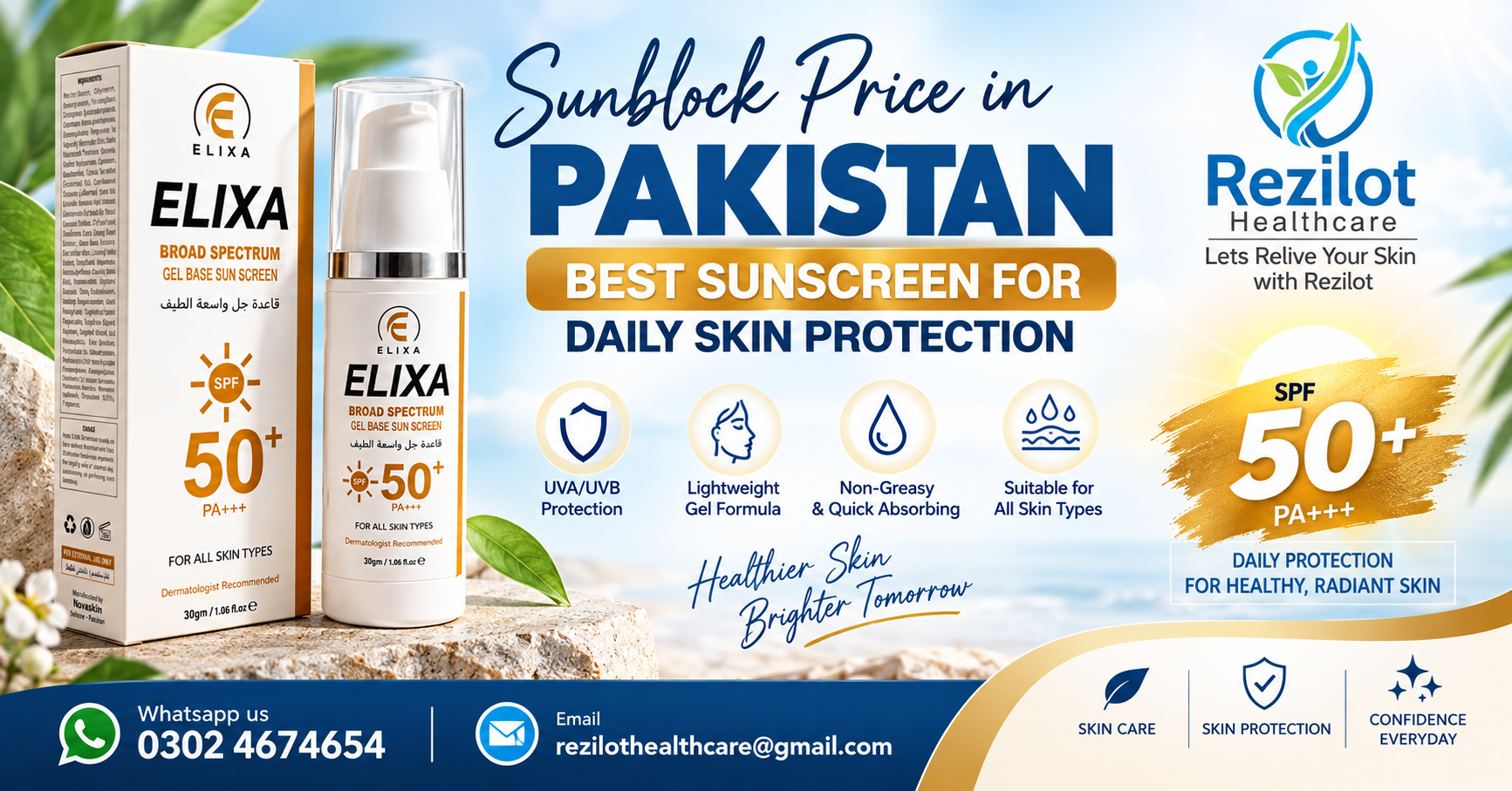
Sunblock Price in Pakistan – Best Sunscreen for Daily Skin Protection
Sunblock Price in Pakistan – Best Sunscreen for Daily Skin Protection
Buying sunblock in Pakistan sounds simple until you actually start shopping. One tube costs a few hundred rupees, another costs several thousand, one promises SPF 100, another says PA++++, and somewhere in between you are trying to figure out which product will protect your face without turning it into a greasy, chalky mess. Add Pakistan’s intense sunshine, hot summers, humidity in many cities, dust, pollution, and the everyday struggle of finding authentic skincare products, and choosing sunscreen becomes more complicated than it should be. That is precisely why comparing only the sunblock price in Pakistan is not enough. The better question is whether the sunscreen gives you dependable broad-spectrum protection in a formula you will actually apply every day.
For everyday protection, dermatologists generally recommend broad-spectrum sunscreen with SPF 30 or higher, while SPF 50 is an especially practical choice for people who spend significant time outdoors. Sunscreen isn’t reserved for beach holidays or blazing June afternoons. Ultraviolet radiation reaches your skin during ordinary activities such as commuting, walking to university, sitting near sunny windows, shopping outdoors, driving, or spending time on a rooftop. Regular protection can help reduce sunburn and cumulative UV damage associated with premature skin aging and skin cancer. For Pakistani consumers concerned about tanning, uneven skin tone, post-acne marks, and hyperpigmentation, daily sunscreen also becomes an important part of a broader skincare routine.
Prices change frequently because of exchange rates, imports, retailer promotions, pack sizes, and product availability. Imported Korean, European, American, and Japanese sunscreens can therefore fluctuate considerably in Pakistan. Instead of treating a particular online listing as a permanent market price, this guide explains the typical price tiers, what features justify paying more, and how to select sunscreen according to skin type. Whether your budget is modest or you are looking for a premium lightweight formula, the objective remains the same: find reliable UV protection that is comfortable enough to use consistently.
Why Sunblock Is Essential for Daily Skin Protection
Sunblock is sometimes treated like an optional skincare product—something you put on when you know you will be standing in direct sunlight for hours. In reality, sunscreen is closer to a seat belt than an umbrella. You do not wait for an accident before fastening a seat belt, and similarly, UV protection works best as a consistent preventive habit rather than an emergency response after your skin starts burning. Sunlight contains ultraviolet radiation, and repeated exposure accumulates throughout your lifetime. Sunscreen helps reduce the amount of UV radiation reaching the skin when it is used correctly alongside other protective measures such as shade, clothing, sunglasses, and hats.
Daily sunscreen becomes particularly relevant when your skincare routine contains ingredients intended to improve pigmentation, acne, or signs of aging. Imagine spending months trying to fade stubborn dark marks while repeatedly exposing your skin to the very radiation that can contribute to pigmentation. It is like mopping the floor while leaving the tap running. Sunscreen does not magically erase pigmentation, but protecting skin from UV exposure can support a routine designed to prevent darkening and visible photoaging. People using retinoids, exfoliating acids, or dermatologist-prescribed treatments should follow the sun-protection advice given with those products because individual treatment requirements can differ.
Another misconception is that sunscreen is unnecessary on cloudy days or during winter. Clouds can reduce some sunlight, but UV exposure does not simply disappear whenever the sky turns grey. Your actual exposure depends on factors such as time of day, season, altitude, location, cloud conditions, and how much time you spend outdoors. A practical approach is to check the local UV index and protect yourself appropriately rather than relying solely on temperature. A cold sunny January afternoon can still involve UV radiation even though your skin does not feel hot.
Daily sunscreen also needs to fit real life. If a formula makes your face extremely oily, stings your eyes, leaves a strong white cast, or pills underneath makeup, chances are you will stop using it. That means the best sunscreen for daily use in Pakistan isn’t automatically the product with the fanciest packaging or highest price. It is an appropriately rated, authentic sunscreen that suits your skin, lifestyle, and budget well enough for you to apply the required amount consistently.
UVA vs UVB Rays and Their Effects on Pakistani Skin
Understanding sunscreen labels becomes much easier once you know what UVA and UVB actually mean. UVB radiation is strongly associated with sunburn and also contributes to skin cancer. UVA penetrates more deeply into the skin and contributes significantly to photoaging and pigmentation while also playing a role in skin cancer. Both matter, which is why choosing a product marked broad spectrum is more useful than focusing on SPF alone. SPF primarily describes protection against sunburn-producing UV radiation under standardized testing; it should not be interpreted as a complete measurement of every form of ultraviolet protection.
You may also notice labels such as PA+, PA+++, or PA++++, particularly on Asian sunscreens. The PA system relates to UVA protection, with additional plus signs indicating higher tested UVA protection within that rating system. European products may instead display a UVA symbol or use other labeling conventions. For the average buyer, there is no need to turn skincare shopping into a chemistry exam. Look for clearly stated broad-spectrum UVA/UVB protection from a reputable manufacturer, choose sufficient SPF, and follow the application directions.
Skin tone deserves some nuance here. People with more melanin may be less likely to experience obvious sunburn than people with very fair skin, but darker skin is not immune to UV damage. Pigmentation concerns can also be particularly noticeable in medium-to-deep skin tones. This matters in Pakistan, where skin tones vary enormously and consumers frequently search for sunscreen specifically because acne marks, melasma, tanning, or uneven pigmentation become more visible following sun exposure. Sunscreen therefore should not be marketed as something only fair-skinned people need.
There is another practical issue: cosmetic appearance. Some mineral UV filters can leave a visible cast, particularly on deeper complexions, although modern formulations vary dramatically. Tinted sunscreens and carefully formulated chemical or hybrid products may provide a more transparent finish for some users. Instead of assuming one sunscreen works equally well for everyone, test texture, finish, eye-area comfort, and cast whenever possible. Effective sun protection depends not merely on what looks impressive on the box, but on whether enough of the product actually ends up on your skin.
Sunblock Price in Pakistan – What Should You Expect to Pay?
The price of sunblock in Pakistan varies dramatically. You can encounter inexpensive locally manufactured options, pharmacy sunscreens, imported drugstore products, Korean beauty formulas, French dermatological brands, and luxury skincare sunscreens—all within the same search results. The important detail is that price by itself does not measure UV protection. A more expensive sunscreen may offer an exceptionally elegant texture, better cosmetic finish, specialized ingredients, stronger water resistance, premium packaging, or imported-brand positioning, but none of those automatically makes it the correct product for your particular skin.
As a general shopping framework rather than a live retailer quotation, Pakistani sunscreen products can be divided into budget, mid-range, and premium categories. Budget sunscreens are often local products and can offer straightforward daily protection at an accessible cost. Mid-range sunscreens tend to include local premium formulations and some imported options, often emphasizing lighter textures, oil control, moisturizing ingredients, or invisible finishes. Premium sunscreens commonly include imported dermatological, Korean, Japanese, European, or prestige products. Their cost may rise considerably because of currency conversion, import expenses, retailer margins, and limited availability.
| Sunscreen Category | Approximate Market Position | Common Features |
|---|---|---|
| Budget | Lower-price segment | Basic SPF protection, local availability |
| Mid-range | Moderate-price segment | Improved texture, skincare ingredients, specialized finishes |
| Premium/imported | Higher-price segment | Advanced cosmetic textures, imported formulas, specialized UV-filter systems |
Exact prices should be checked with reputable Pakistani pharmacies, official brand stores, or authorized retailers before purchase because listings can change quickly. A sunscreen advertised at an unusually low price deserves additional scrutiny, particularly when the normal market price of that imported product is substantially higher. Counterfeit skincare is more than an inconvenience; you are relying on sunscreen to deliver a measurable protective function.
Cost per use matters too. A tiny premium tube may look reasonably priced until you realize how quickly correct application empties it. Compare the price per millilitre, not merely the sticker price. If a PKR 2,000 sunscreen contains twice as much product as a PKR 1,400 alternative, the more expensive tube may actually deliver better value over time. Sunscreen is a consumable product, so affordability needs to account for regular reapplication rather than one-time purchase cost.
Affordable, Mid-Range, and Premium Sunscreen Price Categories
Budget is a legitimate part of skincare. Advice to “just buy the best sunscreen” isn’t particularly useful when a product is so expensive that someone starts rationing it. Applying a tiny amount of premium sunscreen to make the bottle last longer defeats the purpose. For many people, a reasonably priced sunscreen that can be applied generously every day makes more sense than an elegant imported formula they hesitate to use. Consistency often matters more in everyday life than owning the most fashionable bottle on social media.
In the affordable category, pay close attention to SPF rating, broad-spectrum claims, manufacturer information, batch details, expiry date, ingredient list, packaging integrity, and seller credibility. Pakistani skincare companies increasingly offer products targeted at oily, combination, acne-prone, and dry skin. Local manufacturing can also reduce some costs associated with imported products. However, “local” and “imported” should never be used as shortcuts for good or bad quality. Evaluate the individual product and manufacturer instead.
Mid-range products can make sense when texture becomes your biggest obstacle. Someone with oily skin who hates heavy creams might happily use a lightweight gel every morning, whereas a cheaper greasy sunscreen may sit unused in the bathroom cabinet. Likewise, a person with dry skin might prefer a moisturizing lotion that replaces a separate daytime moisturizer, indirectly simplifying the routine. Paying somewhat more for comfort can therefore be rational when it meaningfully improves consistent application.
Premium sunscreens are attractive when you want highly refined textures, minimal cast, comfortable layering under makeup, specialized water resistance, or particular UV filters available in certain international markets. Still, avoid the assumption that higher sunblock price equals proportionally higher protection. SPF 50 does not become “more SPF 50” because the packaging costs more. What premium formulations frequently sell is the user experience around that protection. Decide what you genuinely need, calculate how often you will repurchase the product, and choose a price range you can sustain for twelve months rather than two weeks.
Best Sunscreen in Pakistan for Everyday Use
There is no single best sunscreen in Pakistan for every person because skin type, complexion, climate, occupation, sensitivity, budget, and personal preferences all change the answer. An outdoor field worker and an office employee do not necessarily need the same product characteristics. Someone who sweats heavily may prioritize water resistance, while someone who wears foundation every day may care intensely about pilling and finish. A teenager with very oily acne-prone skin could dislike the rich sunscreen that feels wonderful on dry mature skin. “Best” therefore becomes a match between dependable protection and the person wearing it.
For general daily use, start with broad-spectrum SPF 30 or higher, with SPF 50 being a convenient choice when exposure is substantial or you want additional margin against imperfect application. Then evaluate texture. Gel, fluid, milk, cream, lotion, stick, spray, and hybrid textures behave differently. Facial sunscreen should spread evenly and comfortably without encouraging you to use less than required. If fragrance bothers your skin, investigate fragrance-free options. If you regularly exercise outdoors or sweat heavily, look for an appropriately labeled water-resistant product and follow its reapplication instructions.
Your daily environment matters just as much as your skin type. Someone commuting on a motorcycle through Lahore, Karachi, Islamabad, Faisalabad, Multan, Peshawar, or another Pakistani city may receive considerably more direct exposure than someone working away from windows indoors. Outdoor students, athletes, sales staff, construction workers, travelers, and commuters should think beyond facial sunscreen as well. Ears, neck, hands, arms, and other exposed areas also need protection. Clothing, shade, caps or broad-brimmed hats, and sunglasses complement sunscreen rather than competing with it.
The simplest buying test is surprisingly practical: Will I willingly put enough of this sunscreen on every morning and reapply when necessary? If the answer is no because it feels unbearable, keep looking. A sunscreen can have beautiful marketing and sophisticated ingredients yet fail as your daily sunscreen because you avoid using it. The ideal product disappears into your routine—like brushing your teeth—rather than feeling like a weekly skincare ceremony.
What Makes a Sunscreen Suitable for Daily Application?
A daily sunscreen needs to solve two problems simultaneously: protection and wearability. Protection comes first. Look for a reputable sunscreen with clearly labeled SPF and UVA/broad-spectrum protection, intact packaging, and an unexpired shelf life. Wearability then determines whether that theoretical protection becomes practical. A sunscreen you refuse to wear because it burns your eyes or makes your face uncomfortable cannot deliver much real-world benefit while sitting untouched on your dressing table.
Texture is particularly important in Pakistan’s warmer months. Heavy creams can feel uncomfortable when temperatures rise and humidity increases, especially on oily skin. Lightweight fluids, gels, and gel-creams may feel easier for daytime wear, although formulations differ widely and texture labels are not standardized guarantees. Dry skin, meanwhile, may appreciate a creamier formula containing humectants and barrier-supporting ingredients. Combination skin sometimes needs experimentation because the forehead and nose may become oily while the cheeks feel dry.
Cosmetic compatibility also matters. Give skincare layers enough time to settle and avoid piling excessive products underneath sunscreen if they cause pilling. Some sunscreen formulas sit beautifully under makeup; others roll into tiny flakes when foundation is applied. The problem can arise from interactions among your moisturizer, primer, sunscreen, and makeup rather than from sunscreen alone. Testing different combinations can save you from unnecessarily discarding an otherwise good product.
Finally, daily sunscreen needs to be financially sustainable. Suppose your favorite product costs so much that you use half the necessary amount to preserve it. In that case, its luxurious texture has inadvertently created a protection problem. A slightly less glamorous formula that fits your monthly budget may serve you much better. When comparing sunscreen prices in Pakistan, consider protection, comfort, quantity, and repurchase cost together. That four-part calculation is far more meaningful than simply sorting an online store from highest price to lowest.
How to Choose the Right SPF for Pakistan’s Climate
SPF numbers are probably the most recognizable part of sunscreen packaging, yet they are frequently misunderstood. SPF stands for Sun Protection Factor, and it measures protection against erythema—primarily UVB-induced sunburn—under standardized testing conditions. It does not mean SPF 50 allows you to stay in the sun exactly fifty times longer under every real-world condition. Sweat, swimming, rubbing, application thickness, missed spots, and time all influence practical protection. Treat SPF as a tested protection rating, not a stopwatch.
For everyday use, major dermatology guidance commonly starts at SPF 30, while SPF 50 is a sensible option for strong exposure. Pakistan’s climate varies substantially from coastal Karachi to mountainous northern regions, so there isn’t a single nationwide exposure level every day of the year. Altitude, season, cloud cover, reflective surfaces, and time of day matter. Checking the daily UV index can help you understand current conditions and adjust protective behavior accordingly.
People sometimes assume sunscreen means they can deliberately remain in strong sunlight indefinitely. It does not. Sunscreen is one layer of a larger sun-safety strategy. Seek shade when practical, use protective clothing, wear suitable sunglasses and hats, and avoid unnecessary prolonged exposure during periods of intense UV radiation. Think of sunscreen as one defender in a football team: crucial, but much more effective when the rest of the defense is doing its job too.
For people dealing with melasma, persistent pigmentation, photosensitivity, previous skin cancer, or medical treatments affecting sun sensitivity, generic internet advice should not replace individualized guidance from a dermatologist. Your clinician may recommend particular protection levels, formulations, or additional measures. Everyone else can keep the basic rule refreshingly simple: choose broad-spectrum SPF 30+, apply enough, cover exposed skin, and reapply according to exposure and product directions.
Is SPF 50 Better Than SPF 30?
SPF 50 provides higher tested UVB protection than SPF 30, but consumers often imagine the difference as far larger than it actually is. Under laboratory conditions and when applied correctly, SPF 30 filters roughly 97% of UVB radiation, while SPF 50 filters about 98%. Those percentages can sound almost identical, yet the difference in the amount of UVB transmitted is meaningful: roughly 3% versus 2%. More importantly, real people rarely apply sunscreen as perfectly as laboratory testing protocols do.
This is why choosing SPF 50 can provide useful additional protection, particularly for extended outdoor exposure, high UV conditions, or people prone to sun-related pigmentation. It should not, however, create false confidence. SPF 50 applied too thinly, missed around the hairline, rubbed away with a towel, or left unreapplied after swimming will not perform as intended. Application behavior remains crucial.
Going dramatically higher in SPF also does not eliminate the need for UVA protection. A giant SPF number on the front of the bottle can attract attention, but you still want broad-spectrum protection. Nor does a high SPF mean you can skip shade and protective clothing. Marketing often encourages shoppers to chase the biggest visible number, while good sun protection is actually a collection of fairly ordinary habits performed consistently.
For most shoppers comparing SPF 30 and SPF 50 sunscreens, consider the entire formula. If the SPF 50 version feels comfortable, fits your budget, and provides broad-spectrum protection, it is an excellent everyday option. If an SPF 30 broad-spectrum sunscreen is the product you can reliably purchase and use correctly, it still meets commonly recommended minimum daily protection guidance. The product label matters, but your behavior after opening the bottle matters just as much.
Best Sunblock for Oily and Acne-Prone Skin in Pakistan
People with oily skin often have a complicated relationship with sunscreen. You apply your morning skincare, step outside, and twenty minutes later your forehead seems capable of reflecting traffic. Naturally, that experience makes sunscreen feel like the enemy. The solution is not to abandon UV protection but to search for a formulation designed around lightweight wear, low greasiness, and compatibility with acne-prone skin.
Terms such as non-comedogenic, oil-free, lightweight, gel, fluid, matte, or dry-touch can be useful starting points, although marketing terminology is not an absolute guarantee of how a product will behave on your individual skin. Gel and fluid sunscreens often feel lighter than rich creams, but formulas vary. If your skin is oily yet dehydrated, an aggressively drying sunscreen may actually feel uncomfortable. Skin can produce oil while still having a compromised or dehydrated barrier, so “oil control at any cost” is rarely a sensible goal.
Acne-prone users should also consider the rest of their routine. A heavy moisturizer, facial oil, primer, and sunscreen layered together may create more shine than sunscreen alone. Simplifying morning skincare can sometimes improve the finish considerably. Likewise, if you are using acne treatments such as retinoids or exfoliating acids, follow your dermatologist’s directions regarding sun protection. Do not stop prescribed acne treatment merely because you are experimenting with sunscreen textures.
When testing a new product, watch for persistent burning, itching, rash, or a clear pattern of breakouts. Acne has multiple causes, so a single new pimple does not necessarily prove sunscreen caused it. Introducing products methodically makes troubleshooting easier. The best sunblock for oily skin in Pakistan is ultimately one that provides adequate broad-spectrum protection while remaining comfortable enough that oiliness does not tempt you to skip it.
Ingredients and Formulas to Look for in Oily Skin Sunscreen
Rather than hunting for one magical ingredient, oily-skin users should pay attention to the overall formulation. Silica and other oil-absorbing components may contribute to a more matte finish in some products, while lightweight humectants can add hydration without creating the same heavy sensation as an occlusive cream. Niacinamide is also included in some skincare sunscreens because of its broader skin-supporting properties. None of these additions replaces effective UV filters; they simply influence the experience of wearing the product.
UV filters themselves can be mineral, organic—often called chemical—or combinations of both, depending on the formulation and market regulations. Some modern organic-filter formulas can feel extremely lightweight and transparent, which is attractive for oily skin. Mineral sunscreens containing zinc oxide and/or titanium dioxide may suit other users but can occasionally feel heavier or leave a cast depending on the formulation. You cannot reliably predict the entire experience from the filter category alone.
Fragrance is another consideration, particularly if acne-prone skin is also sensitive. Fragrance does not automatically make a sunscreen bad, but people with known fragrance sensitivity may prefer fragrance-free products. Similarly, alcohol in cosmetic formulations is more nuanced than internet ingredient blacklists suggest. Certain alcohols help create lightweight, quick-drying textures, while fatty alcohols serve entirely different formulation roles. If a product irritates your skin, stop using it and identify the problem with professional guidance when necessary rather than assuming every ingredient with an intimidating chemical name is harmful.
A practical oily-skin routine can be quite simple: gentle cleansing, any necessary treatment, lightweight moisturizer if needed, and sunscreen. Avoid constantly stacking ten products because social media says each one is essential. Your skin does not earn bonus points for complexity. A comfortable SPF 50 sunscreen for oily skin, combined with consistent application and sensible sun avoidance, can be much more useful than an elaborate routine that you cannot maintain.
Best Sunscreen for Dry and Sensitive Skin
Dry skin asks a different question: “Will this sunscreen protect me without making my face feel like paper?” Richer lotions and creams can work beautifully because they combine UV protection with a more moisturizing base. Ingredients such as glycerin, hyaluronic acid, ceramides, squalane, and other emollients or humectants may improve comfort depending on the formulation. The exact ingredient list matters less than how the complete product performs on your skin.
Sensitive skin is trickier because “sensitive” can describe many different situations. Some people react to fragrance, others experience rosacea, eczema, compromised skin barriers, eye-area stinging, or sensitivity to particular sunscreen filters. Mineral sunscreens are sometimes recommended for people who find certain organic UV filters irritating, but they are not universally irritation-proof. Even a mineral formula contains many other ingredients that could potentially disagree with an individual user.
Patch testing a new product on a limited area can be useful before covering your entire face, especially if your skin has reacted to cosmetics previously. If you have eczema, rosacea, persistent dermatitis, severe acne, or unexplained reactions, professional dermatological advice is more appropriate than repeatedly buying products based on TikTok comments. Skin conditions can resemble each other while requiring very different management.
Comfort should never distract from protection, though. A beautiful moisturizer with a tiny amount of incidental SPF may not substitute for a dedicated sunscreen used in an adequate quantity. Look for clear broad-spectrum SPF labeling, follow application directions, and cover commonly forgotten areas. Dry skin can absolutely enjoy sunscreen; you simply need a formula that feels more like a comfortable protective layer than a tightening mask.
Moisturizing Ingredients That Support the Skin Barrier
Humectants, emollients, and occlusives play different roles in moisturizing formulations. Humectants such as glycerin and hyaluronic acid attract and retain water within the outer skin layers. Emollients help smooth spaces between skin cells, creating a softer feel. Occlusive ingredients reduce water loss by forming a more protective surface layer. Well-designed sunscreens may combine several of these functions while also incorporating UV filters.
Ceramides have become especially popular because they are naturally important components of the skin barrier. A sunscreen containing ceramides can be attractive for dry skin, but once again, a single fashionable ingredient does not define product quality. Concentration, formulation, stability, packaging, and the rest of the ingredient system all influence performance. Marketing loves heroes; cosmetic chemistry usually works as a team.
If your sunscreen is already sufficiently moisturizing, you may not need a separate heavy moisturizer underneath it every morning. That can save money and reduce pilling. On the other hand, very dry skin may feel better with moisturizer first, followed by sunscreen after the moisturizer settles. Experiment within the manufacturer’s directions and your dermatologist’s recommendations.
Sensitive skin also benefits from keeping routines predictable. Constantly rotating cleansers, serums, exfoliants, masks, oils, and sunscreens makes it extremely difficult to identify the cause when irritation appears. Introduce changes gradually. When you find a moisturizing sunscreen that offers reliable protection, feels comfortable, and fits your budget, there is no requirement to replace it every time a new viral product appears.
Mineral vs Chemical Sunscreen – Which One Should You Buy?
The internet often turns mineral vs chemical sunscreen into an unnecessarily dramatic battle. Mineral sunscreens generally use zinc oxide and/or titanium dioxide as UV filters, while so-called chemical sunscreens use organic UV filters. Both categories can provide effective protection when properly formulated, tested, and used. The more useful question is not which category is morally superior; it is which specific product provides suitable broad-spectrum protection and works well for your skin.
Mineral sunscreens can be appealing to users who tolerate their formulas better, but traditional versions may leave a white cast, particularly on medium and deeper skin tones. Tinted mineral sunscreens can address some of this cosmetic issue, although matching the tint to diverse Pakistani complexions is not always easy. Modern formulation technology has also improved the texture and appearance of many mineral products considerably.
Organic-filter sunscreens frequently offer elegant, transparent, lightweight textures. Depending on the market, newer UV filters may provide excellent UVA protection and cosmetically appealing finishes. Some people experience eye stinging or skin irritation with particular formulas, while countless others use them comfortably every day. Saying “chemical sunscreen is bad for sensitive skin” as a universal rule oversimplifies a highly individual issue.
Hybrid products combine approaches and can offer an excellent balance of protection and cosmetic elegance. Instead of shopping according to internet fear, examine SPF, UVA protection, water resistance when needed, finish, skin compatibility, authenticity, and cost. Sunscreen categories are useful for understanding formulations, but your face ultimately experiences a complete product rather than an ingredient-category debate.
How to Apply Sunblock Correctly for Maximum Protection
Even an expensive sunscreen cannot deliver its labeled protection if you apply far too little. Sunscreen testing uses a standardized application amount, and real-world users commonly underapply. For exposed facial areas, people often use practical rules such as the two-finger method for the face and neck, although exact needs depend on face size, product consistency, and the areas being covered. The most reliable approach is to follow the manufacturer’s instructions and ensure an even, generous layer across exposed skin.
Do not forget easy-to-miss locations: hairline, ears, sides of the face, neck, and exposed upper chest. If your hands and arms remain uncovered outdoors, protect them as well. Sunscreen should generally be applied before sun exposure, with timing guided by the product label. Some products specify approximately 15 minutes beforehand. Give facial sunscreen enough time to form an even layer before aggressively rubbing makeup over it.
Reapplication is where many otherwise excellent routines collapse. Applying sunscreen at 7:00 a.m. and expecting identical protection through an outdoor afternoon is unrealistic. Reapply according to label instructions, commonly around every two hours during ongoing sun exposure and sooner after swimming, heavy sweating, or toweling. Water-resistant sunscreen is not waterproof forever; its label should indicate the tested period of water resistance.
Makeup complicates reapplication, but it does not make it impossible. Some people carefully reapply lotion over makeup, while others use sunscreen sticks, cushions, or sprays designed for convenient touch-ups. Be cautious about assuming a light mist or tiny swipe automatically supplies the full labeled SPF; adequate quantity and even coverage still matter. Convenience products are helpful only when used according to their directions.
When and How Often Should You Reapply Sunscreen?
For continuous outdoor exposure, reapplication approximately every two hours is a widely used guideline. Swimming, sweating, wiping your face, or towel drying can require earlier reapplication. Always check the specific product because water-resistant sunscreens are tested for defined periods rather than unlimited protection. If you are spending the day at the beach, hiking, playing cricket, riding a motorcycle, or working outdoors, reapplication should be part of your plan before you leave home.
Indoor routines are less straightforward. Someone working deep inside a building away from windows has a different exposure pattern from someone sitting beside a large sunlit window or repeatedly stepping outdoors. Rather than obsessing over a timer in every circumstance, consider your actual UV exposure. If you leave the office for lunch, drive home in strong afternoon sun, or spend time outdoors after work, refreshing protection before that exposure can be sensible.
Sweat is especially relevant in Pakistani summers. A sunscreen may begin beautifully at breakfast but undergo significant rubbing and sweating during a hot commute. Water-resistant formulas can be valuable for people with active lifestyles, although they may feel heavier than everyday indoor sunscreens. Some users therefore keep separate products: an elegant daily facial sunscreen and a more robust water-resistant sunscreen for sports or extended outdoor activity.
The best reapplication strategy is the one you can realistically maintain while still using enough product. Keep sunscreen somewhere convenient, such as your bag or workplace drawer, provided storage conditions comply with the label and it is not exposed to excessive heat. A sunscreen forgotten at home cannot protect you during an unexpected outdoor afternoon.
Common Sunscreen Mistakes That Reduce Sun Protection
The first common mistake is simply using too little sunscreen. People buy a costly 50 ml tube and unconsciously ration every drop, spreading a whisper-thin layer across the face. That may feel economical, but sunscreen’s labeled performance depends on sufficient application. If affordability causes chronic underapplication, switching to a less expensive authentic product that you can use generously may be a smarter choice.
The second mistake is assuming sunscreen lasts all day regardless of circumstances. Sweat, swimming, rubbing, toweling, and prolonged exposure can reduce protection. Reapplication matters, especially outdoors. Another error is applying sunscreen only to the center of the face while forgetting ears, neck, hairline, and other exposed areas. UV radiation is not considerate enough to target only the places where you have skincare concerns.
A third mistake is relying on makeup SPF as the entire sun-protection strategy. Foundation and powder may contain SPF, but most people do not apply makeup in the quantity used for sunscreen testing. A dedicated sunscreen underneath makeup provides a more dependable base. Similarly, mixing sunscreen directly with moisturizer or foundation can interfere with the uniform film the sunscreen is designed to create; layer products separately unless the manufacturer specifically instructs otherwise.
Finally, consumers sometimes treat SPF as permission for unlimited sun exposure. SPF 50 is not an invisible force field. Shade, protective clothing, sunglasses, and sensible exposure habits remain important. Good sun protection is boring in the best possible way: adequate sunscreen, proper coverage, timely reapplication, and fewer unnecessary hours baking under intense sunlight.
How to Buy Original Sunblock in Pakistan
Authenticity deserves special attention when shopping online. Popular imported sunscreens can attract counterfeit listings, particularly when social media suddenly turns one product viral. Start with official brand stores, authorized distributors, established pharmacies, reputable skincare retailers, and verified marketplace sellers where possible. An unusually low price is not definitive proof of a fake, but it should prompt additional checking.
Inspect the packaging when your sunscreen arrives. Look for damaged seals, inconsistent printing, suspicious spelling mistakes, missing batch information, unusual texture or smell, and expiry details. Packaging can legitimately change when brands redesign products or manufacture versions for different markets, so visual differences alone do not prove counterfeiting. Compare against information from the manufacturer’s official channels when uncertain.
Imported sunscreen pricing can fluctuate considerably because the Pakistani rupee exchange rate, shipping, duties, supply constraints, and promotions affect retail prices. This is one reason a fixed “2026 sunscreen price list” can become obsolete quickly. Check current prices from several credible retailers on the day you plan to purchase rather than trusting an old blog post. If one listing is dramatically cheaper than every reputable alternative, investigate before paying.
Storage matters after purchase too. Do not leave sunscreen roasting for prolonged periods in extreme heat, such as inside a parked car during summer. Follow the manufacturer’s storage instructions and pay attention to expiry dates and any period-after-opening symbol. Buying an authentic sunscreen is only the beginning; storing and using it properly helps preserve the product as intended.
Conclusion
Finding the right sunblock price in Pakistan is really about balancing four things: protection, skin compatibility, authenticity, and affordability. You do not necessarily need the most expensive imported sunscreen on the shelf. You need an authentic, appropriately rated broad-spectrum product that you can apply generously and consistently. For everyday protection, SPF 30 or higher is a widely recommended baseline, while SPF 50 is a practical choice for stronger exposure and is widely available in modern facial sunscreens.
Skin type should guide texture. Oily and acne-prone skin often prefers lightweight gels, fluids, matte finishes, and non-comedogenic formulations. Dry skin may feel more comfortable with moisturizing creams or lotions containing ingredients such as glycerin and ceramides. Sensitive skin may require more experimentation, patch testing, or dermatologist guidance. Mineral, organic/chemical, and hybrid sunscreens can all be legitimate options; the quality and suitability of the finished formulation matter more than internet arguments over categories.
Price should be judged by cost per usable quantity, not simply the number printed on the checkout screen. A reasonably priced sunscreen that you can repurchase and reapply is often more useful than an expensive product you ration. Compare millilitres, check authenticity, buy through trustworthy sellers, and remember that imported-product prices can change rapidly in Pakistan.
Most importantly, sunscreen works through habit. Put it where you can see it in the morning, make it part of your routine, and protect other exposed skin rather than focusing exclusively on your face. Combine sunscreen with shade, clothing, hats, and sensible exposure habits. The “best sunscreen” is not a trophy sitting on your shelf—it is reliable protection you actually wear.
Frequently Asked Questions About Sunblock Price in Pakistan
1. What is the average sunblock price in Pakistan?
Prices vary widely according to brand, pack size, formulation, seller, and whether the product is locally manufactured or imported. Because Pakistani retail prices and exchange rates can change quickly, check current listings from reputable pharmacies or authorized sellers before purchasing.
2. Which sunscreen is best in Pakistan?
There is no universally best product. Look for broad-spectrum SPF 30 or higher, then choose a texture appropriate for your skin type, exposure, budget, and preferences.
3. Is SPF 50 good for daily use?
Yes. SPF 50 can be used daily and is particularly practical when UV exposure is substantial.
4. Is SPF 30 enough in Pakistan?
Broad-spectrum SPF 30 meets the commonly recommended minimum for everyday sun protection, although SPF 50 offers additional UVB protection and may be preferable for stronger exposure.
5. Which sunblock is best for oily skin in Pakistan?
Lightweight gel, fluid, oil-free, matte, or non-comedogenic formulas are useful starting points. Individual skin response still varies.
6. Which sunscreen is suitable for acne-prone skin?
Look for lightweight and non-comedogenic products that do not irritate your skin. People with persistent or severe acne should discuss their skincare routine with a dermatologist.
7. Can sunscreen cause pimples?
Certain formulations may feel too occlusive or irritate particular users, but sunscreen does not universally cause acne. Trying a lighter formulation may help if a rich product appears to worsen breakouts.
8. Does sunblock prevent tanning?
Proper sunscreen use reduces UV exposure and can reduce UV-induced tanning, but no sunscreen blocks 100% of ultraviolet radiation. Clothing and shade provide additional protection.
9. Can I use sunblock every day?
Yes. Daily use on exposed skin is an important sun-protection habit, particularly when the UV index and your activities indicate meaningful exposure.
10. Should I wear sunscreen indoors?
Your need depends on exposure. People sitting near sunny windows or repeatedly going outdoors can still benefit from protection; someone deep inside a building has a different exposure pattern.
11. How much sunscreen should I apply to my face?
Apply an even, generous amount according to the product instructions. The two-finger method is often used as a practical approximation for face and neck, although exact requirements vary.
12. How often should sunscreen be reapplied?
During continued outdoor exposure, approximately every two hours is a common recommendation, with earlier reapplication after swimming, sweating, or toweling according to the product label.
13. Is SPF 100 twice as strong as SPF 50?
No. SPF values do not translate into a simple linear percentage of UV radiation blocked. Higher SPF offers additional UVB protection but never eliminates the need for proper application and other protective measures.
14. Is mineral sunscreen better than chemical sunscreen?
Neither category is universally better. Both can provide effective UV protection when properly formulated. Skin sensitivity, cosmetic finish, filters, and personal preferences should guide your choice.
15. What does PA++++ mean on sunscreen?
The PA system indicates tested UVA protection. More plus signs represent higher UVA protection within that rating system, with PA++++ representing the highest commonly displayed PA category.
16. Can sunscreen help with dark spots?
Sun protection can help prevent UV exposure from worsening some pigmentation concerns and is commonly incorporated into routines addressing dark spots and melasma.
17. Should men use sunscreen every day?
Yes. UV radiation does not distinguish between genders. Sunscreen recommendations depend on exposure and skin needs, not whether the user is male or female.
18. Can children use adult sunscreen?
Children’s sun-protection needs vary by age, and infants require particular precautions. Parents should follow pediatric guidance and product age instructions rather than assuming every adult facial sunscreen is suitable for a child.
19. How can I identify fake sunscreen in Pakistan?
Purchase from authorized or reputable sellers and check seals, batch details, expiry information, printing quality, texture, and manufacturer information. Be cautious when an imported product is offered at an implausibly low price.
20. Is expensive sunscreen better than cheap sunscreen?
Not automatically. Premium products may provide more elegant textures or specialized features, but price alone does not establish protection quality. An authentic affordable sunscreen with appropriate broad-spectrum SPF that you use correctly can be an excellent daily choice.

Leave a Reply